Song Meaning
The narrator is pushing back against the idea that they do nothing, framing their internal biological and mental processes as intense, constant work. They describe their sleeping mind as a place where "electrons dance" and "cells divide," and their eating as a cascade of "reactions" and an overwhelming influx of "information." This isn't passive existence; it's a complex, unseen labor that fuels their being.
The core tension lies in the contrast between this internal, ceaseless activity and the external perception of idleness. The repeated phrase "A pak že prý tu nedělám nic" (And then they say I do nothing here) highlights this disconnect. The narrator feels misunderstood, their intricate biological functions dismissed as mere inactivity. This fuels a defiant challenge: "Ať to zkusí laboratoř" (Let the laboratory try), implying that no external scientific apparatus could replicate or even fully comprehend the complex, vital work happening within them.
The lyrics cleverly employ scientific imagery not just as metaphor, but as a direct description of internal states. The "laboratory" becomes a stand-in for the narrator's own body and mind, a place of constant "work" and "reactions." Even the seemingly simple act of feeling love, expressed as "Znamená to, že tě mám rád" (It means that I love you), is linked to this internal "chemistry." This suggests that emotional experience is itself a form of complex, vital labor, irreducible to simple data or external observation.
Ultimately, the effectiveness of these lyrics comes from their assertion of the profound, often invisible, work of simply existing and feeling. By likening the body and mind to a sophisticated, self-regulating laboratory, the narrator elevates the mundane into something extraordinary. The defiant chorus challenges anyone to understand or replicate this internal world, celebrating the inherent value and complexity of subjective experience.
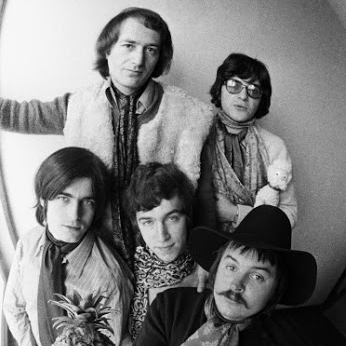
 View Artist