Song Meaning
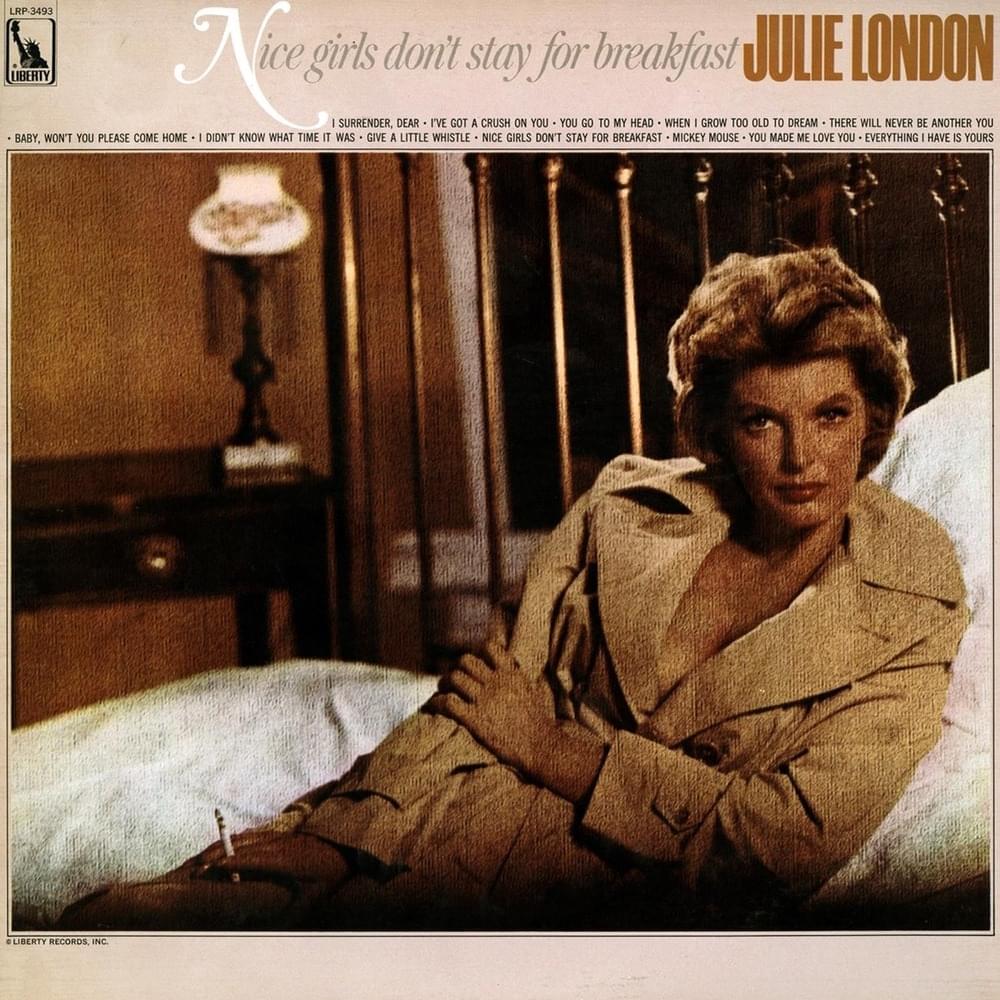
Julie London's rendition of "I Didn't Know What Time It Was" isn't just a love song; it's a psychological study in how transformative connection warps our perception of reality. The lyrics detail a narrator adrift in a kind of existential fog, completely detached from the anchors of time and routine. Life before love is depicted as a monochrome blur, lacking the vibrancy needed to distinguish one moment from the next. Then, the arrival of a significant other acts as a catalyst, snapping the narrator into sharp focus. Suddenly, the mundane markers of time – days, years – become vividly meaningful, saturated with the warmth and promise of the present. This isn't merely about finding romance; it's about finding a reason to truly *inhabit* time.
But the song's brilliance lies in its subtle acknowledgment of the self-deception inherent in such infatuation. The bridge introduces a jarringly honest perspective. The narrator admits to a past of detached cynicism, a predatory "hunt" for fleeting connection, all conducted with a detached, almost ironic awareness. This confession colors the rest of the song. Is the newfound clarity genuine, or simply a more sophisticated form of self-delusion? Is the love object truly "shining" with affection, or is the narrator projecting a desperate need for meaning onto them? The repetition of "I'm wise and I know what time it is now" at the song’s conclusion reads as both a declaration of newfound awareness and a desperate, almost manic assertion against the lurking possibility that nothing has really changed.
Ultimately, the song meaning circles around the idea that love, or perhaps any intense emotional experience, can create its own subjective reality. It serves as a potent reminder that the stories we tell ourselves about our lives, especially those involving love, are often carefully constructed narratives designed to make the chaos of existence feel a little more manageable. Julie London’s interpretation underscores the inherent ambiguity, leaving us to question whether the narrator has truly awakened or simply traded one form of illusion for another.
 View Artist