Song Meaning
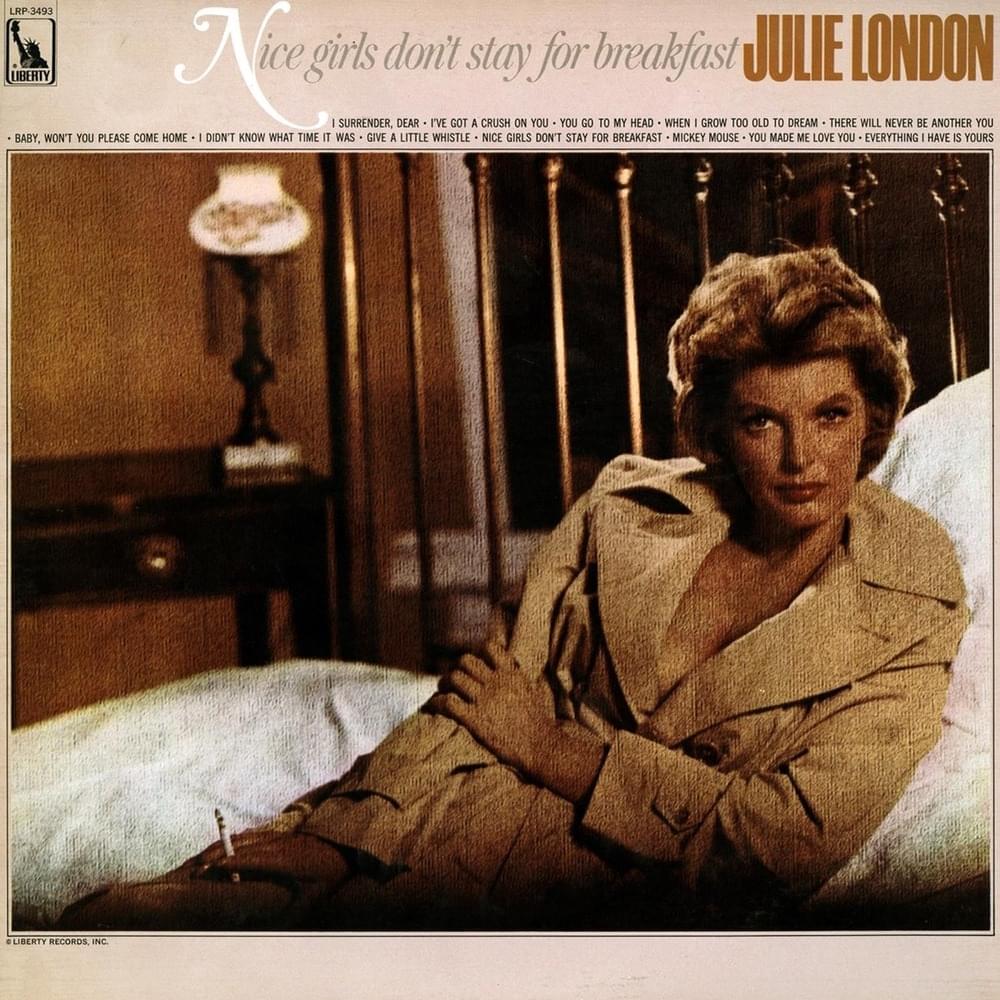
Julie London's rendition of "Give a Little Whistle" carries a deceptively simple message, one that belies the complex internal battles we all face. The lyrics, seemingly a straightforward instruction, delve into the psyche of moral decision-making. It's a call to action, urging listeners to tap into their inner moral compass when faced with temptation or confusion. The act of whistling, or even yelling for Jiminy Cricket, becomes a symbolic reaching out for guidance, a desperate attempt to reconnect with one's conscience. It posits the idea that we all possess an internal guide, a 'conscience,' that can steer us away from wrongdoing, if only we remember to consult it. The charm of London's delivery adds to the song's allure, rendering the message both comforting and subtly urgent.
The song's power lies in its recognition of the human struggle against temptation. The lyrics acknowledge that 'temptation' can be powerful, and that distinguishing 'right from wrong' isn't always easy. The 'little whistle' is not just a quaint suggestion, but a tool for self-intervention, a way to pause and reflect before succumbing to negative impulses. It’s a psychological prompt, a technique of cognitive defusion where you create space between your thoughts/urges and your actions. The repetition of 'Give a little whistle!' emphasizes the importance of consistent self-monitoring, a constant effort to stay on the 'straight and narrow path.'
Ultimately, Julie London's version transforms a children's tune into a sophisticated reminder of our inherent moral responsibility. It suggests that navigating life's ethical dilemmas requires active engagement with our conscience, and that even the simplest act – a whistle, a call for help – can be a powerful tool in maintaining our integrity. It's a recognition that the battle between right and wrong is ongoing, and that we all need a little reminder to stay true to ourselves.
 View Artist