Song Meaning
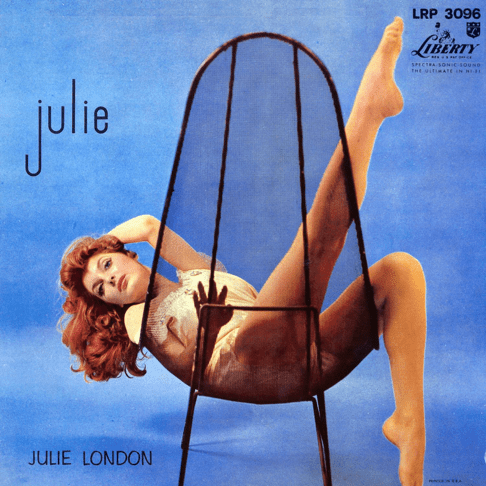
{"song_id": 14915764, "meaning": "Julie London's rendition of \"Don'cha Go 'Way Mad\" isn't just a breezy jazz standard; it's a masterclass in emotional manipulation, delivered with a velvety voice that could melt glaciers. The song's meaning hinges on the speaker's blatant infidelity and her subsequent, almost comical, attempts at damage control. She admits to a \"rendezvous with somebody new,\" yet immediately downplays it as a fleeting, insignificant event. The repeated plea, \"Baby, baby, don'cha go away mad,\" drips with a saccharine sweetness that barely masks the underlying desperation. It's a performance of contrition, designed to soothe a wounded ego rather than express genuine remorse. The jazz-age setting provides a sophisticated, knowing backdrop.
The lyrics reveal a fascinating power dynamic. The speaker acknowledges her partner's right to be upset (\"You got a reason to be mad, I suppose\"), but quickly pivots to minimizing the affair's importance. She dismisses her lover as \"a passin' fad\" and \"his kind's a dime a dozen,\" attempting to diminish the threat he posed to the relationship. The bizarre insertion of the partner's cousin as a witness adds a layer of farcical awkwardness. It subtly shifts blame, implying that the discovery was accidental and, therefore, less indicative of a pattern of deceit.
Ultimately, \"Don'cha Go 'Way Mad\" is a study in self-preservation disguised as an apology. The speaker's primary concern isn't the pain she inflicted, but the potential loss of her partner. The suggestion to \"forgive and forget\" and the demand for a kiss to prove reconciliation is a calculated move to regain control. Julie London's delivery, both seductive and slightly unsettling, perfectly captures the song's complex layers of guilt, manipulation, and the enduring human desire to avoid the consequences of our actions. The song isn't just about cheating; it's about the elaborate dance we perform to maintain the façade of love, even when the truth is staring us in the face."}
 View Artist