Song Meaning
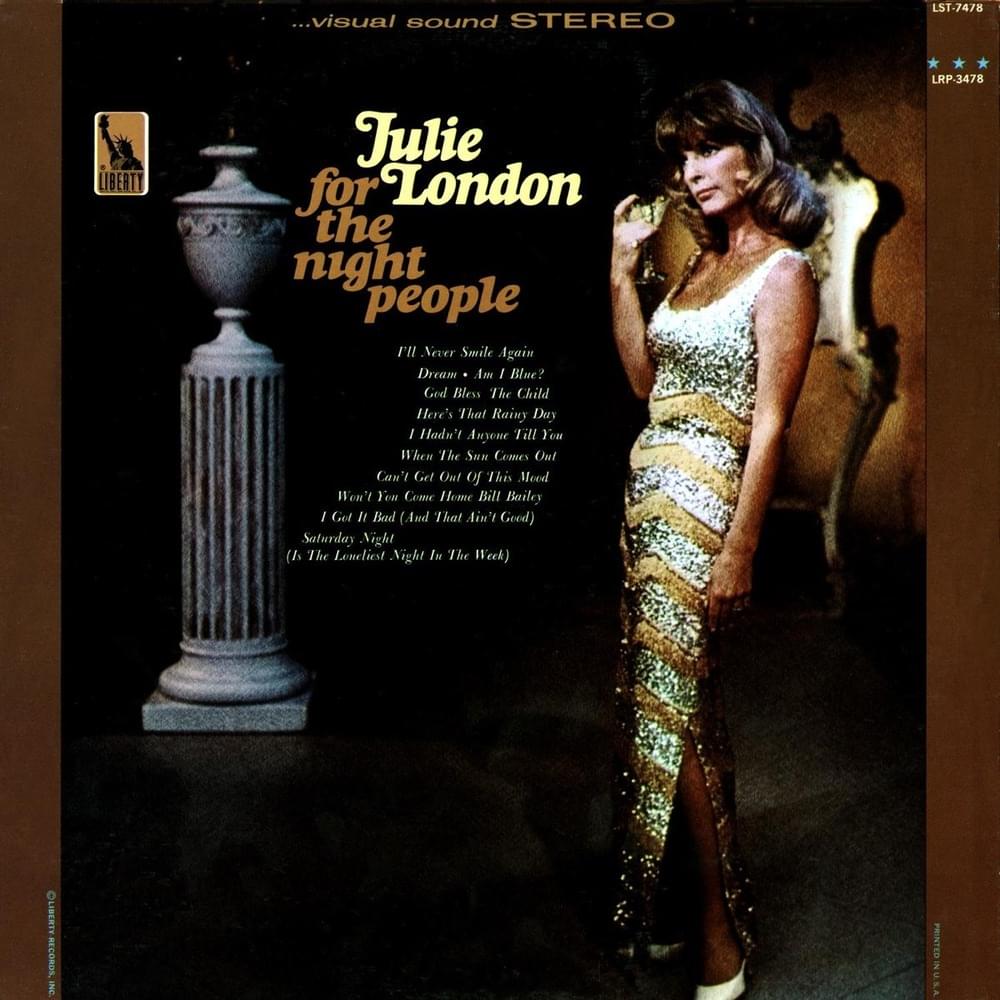
Julie London's "Can't Get Out of This Mood" is a masterclass in portraying the exquisite agony of infatuation, a state where logic surrenders to raw, uncontrollable emotion. It's not merely about love; it's about being utterly consumed by a feeling, trapped in a self-perpetuating cycle of longing. The lyrics paint a vivid picture of someone wrestling with the aftermath of a passionate encounter, a kiss that has irrevocably altered their emotional landscape. The singer acknowledges the irrationality of her obsession – "The thrill should have been all gone by today, in the usual way" – yet finds herself powerless to shake it off. This isn't a celebration of romance; it's an exploration of its darker side, the vulnerability and lack of control that come with surrendering to intense desire. The phrase 'Can't Get Out of This Mood' takes on a chilling quality because it's repeated like a mantra; she is hypnotized by the experience.
The song meaning hinges on the conflict between expectation and reality. The singer expected the thrill to fade, to return to normalcy, but instead, she's plunged deeper into a dreamlike state. The admission, "Wasn't part of my scheme, to sigh, and tell you that I love you," exposes a vulnerability that's both unsettling and relatable. It's the moment where the carefully constructed facade crumbles, revealing the raw emotion beneath. The repeated line "But I'm sayin' it, I'm playin' it dumb" suggests a self-awareness, a recognition of her own foolishness, yet she's unable to break free from the spell. She knows she's heading for heartbreak, but she seems almost resigned to her fate, caught in the undertow of her own feelings.
Ultimately, "Can't Get Out of This Mood" is a study in the psychology of obsession. The lyrics capture the feeling of being trapped in a loop, replaying the encounter, reliving the emotions, unable to move on. The simplicity of the lyrics amplifies the intensity of the feeling. It's a testament to Julie London's ability to convey complex emotions with understated elegance, making it a timeless exploration of the intoxicating and sometimes destructive power of infatuation. The song's lasting appeal lies in its ability to resonate with anyone who has ever found themselves helplessly caught in the grip of an overwhelming emotion, fully cognizant of the wreckage to come but unable to change course. This deep lyrics analysis finds that the song is less about the object of affection and more about the internal prison constructed by the singer's own mind.
 View Artist