Song Meaning
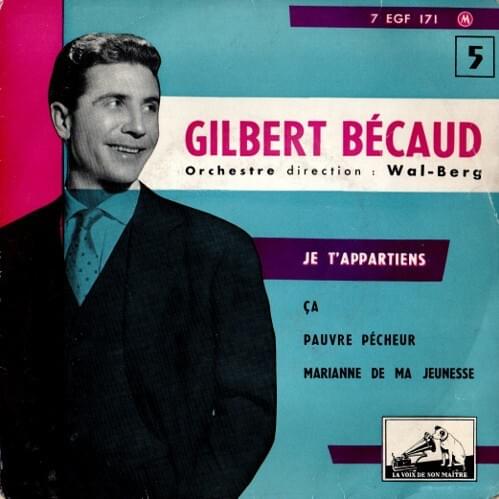
Gilbert Bécaud's "Je t'appartiens" is a stark, almost unsettling exploration of devotion pushed to its absolute limit. The song meaning isn't a simple declaration of love; it's a portrait of total surrender, a relinquishing of selfhood to another. The repetition of "Je t'appartiens" ("I belong to you") isn't romantic. It's a mantra of subjugation, comparing the speaker to clay, a fragile insect, a docile slave. This isn't about partnership; it's about ownership. The lyrics analysis reveals a disturbing power dynamic at play. The object of affection is described as the speaker's "only master," someone to whom they must submit entirely. Even the potential for condemnation, for having one's soul thrown into the flames, doesn't break the bond. This hints at a relationship built on profound insecurity, where the speaker's sense of self is entirely dependent on the other person's validation.
The middle verses introduce a jarring contrast. The speaker questions what they can do to satisfy this "master of the earth," yet acknowledges their own limitations. They can't sing praises like an angel; they're just a man, a "poor man." This self-deprecation underscores the imbalance of power. The line "Je t'aime bien / Comme un copain" ("I like you a lot / Like a buddy") is perhaps the most unsettling of all. It's a desperate attempt to humanize the relationship, to find some semblance of equality within this dynamic of utter submission. But the casualness of the phrase only highlights the speaker's vulnerability and the vast chasm of power that separates them from the object of their affection.
Ultimately, "Je t'appartiens" is less a love song and more a psychological study of codependency and the dangers of sacrificing one's identity for the sake of another. The final verses, musing on the silence of the "immense palace" where the object of affection resides, suggest a profound loneliness at the heart of this unbalanced relationship. Is it a plea? Or a resignation that hints that the only way to find solace is within the isolation of the palace itself?
 View Artist