Song Meaning
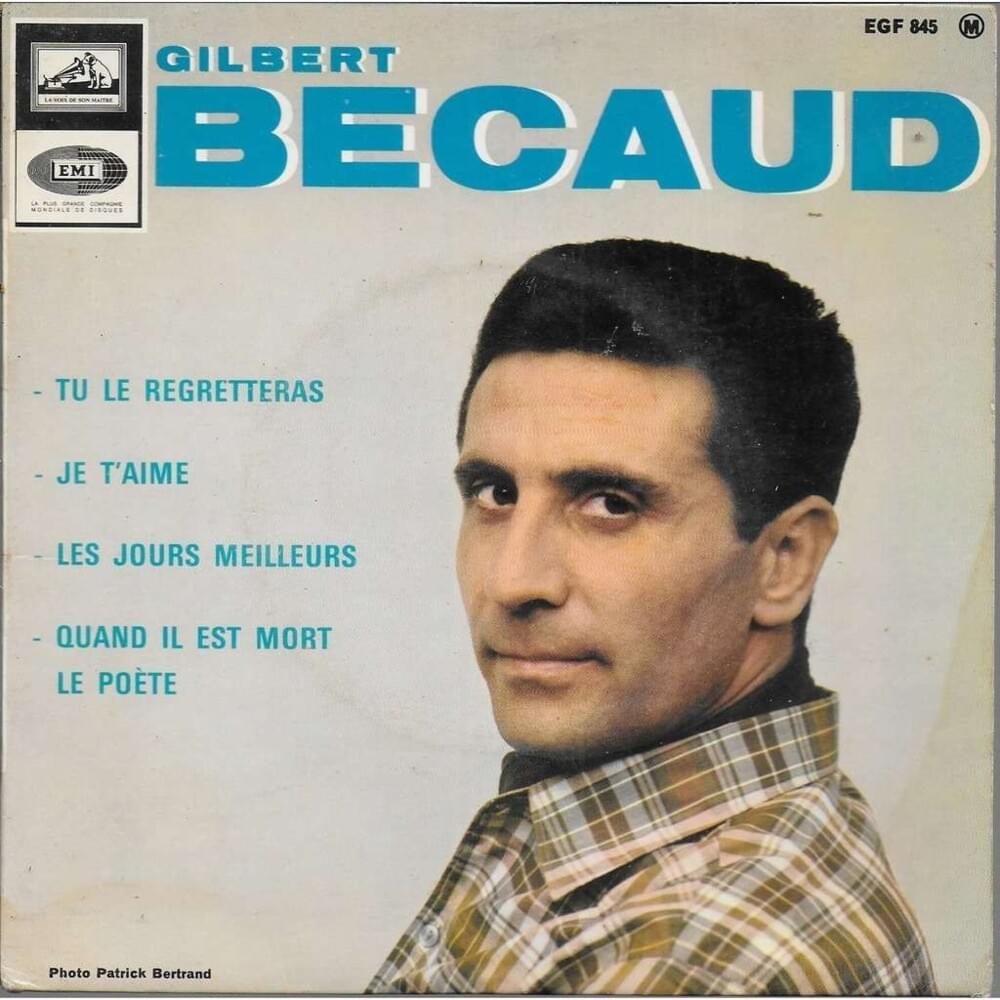
Gilbert Bécaud's "Quand il est mort, le poète" transcends a simple lament for a deceased poet; it’s a study in grief, legacy, and the enduring power of art. The repetition of phrases like "Quand il est mort, le poète" and "Tous ses amis pleuraient" creates a hypnotic, almost liturgical effect, emphasizing the universality of loss within a creative community. It’s not just the poet’s intimates who mourn, but "le monde entier," suggesting the poet's work resonated far beyond his immediate circle, touching the collective human experience. The song explores how the impact of an artist reverberates throughout society. The blunt simplicity of the lyrics belies a sophisticated understanding of how artists shape our collective consciousness.
The second half of "Quand il est mort, le poète" shifts from mourning to memorialization, a psychological pivot crucial to understanding the song's deeper meaning. The image of burying the poet's star in a field of wheat is particularly potent. Stars, traditionally symbols of fame and brilliance, are grounded, returning to the earth. This act acknowledges the poet's physical absence but also signifies the continuation of his influence – the star's energy is now feeding the soil. It speaks to the immortality that art provides, where the artist’s essence is not extinguished but transformed and integrated into the fabric of the world.
Finally, the transformation of the wheat field into a field of cornflowers ("des bleuets") provides the song's emotional resolution. Cornflowers, often associated with remembrance and delicate beauty, symbolize the tangible, lasting impact of the poet's work. The idea that "c'est pour ça qu'on le trouve" (that’s why we find him) suggests that the poet's spirit, his artistic essence, lives on in the beauty he inspired. The lyrics analysis reveals that "Quand il est mort, le poète" portrays death not as an ending but as a metamorphosis, where the artist's legacy blooms anew, offering solace and inspiration to those left behind. The song subtly posits that true artistry transcends mortality, becoming an intrinsic part of the world's beauty.
 View Artist