Song Meaning
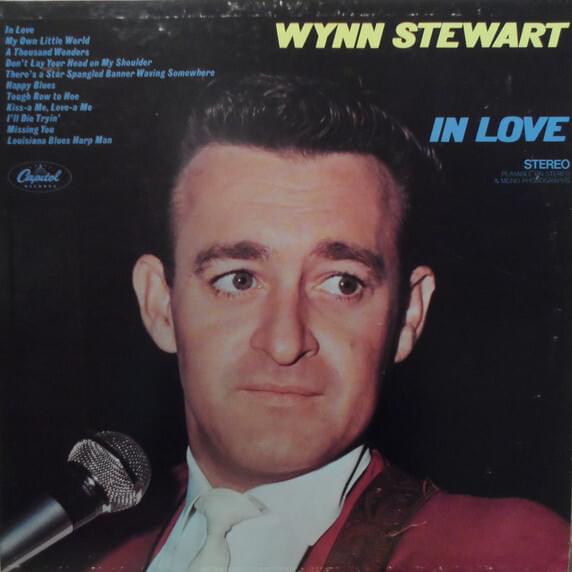
Wynn Stewart's "My Own Little World" is a disarmingly simple paean to contentment, a quiet rebellion against the relentless pursuit of societal benchmarks. The song, at its core, is a declaration of independence from the prescribed paths to happiness. Stewart isn't interested in the comparative metrics of success – fortune, fame, big cars, diamond rings – that often define worth in the eyes of the world. Instead, he stakes his claim on a far more intimate and, arguably, resilient form of joy: the shared space created with a loved one. The repeated refrain, "As long as I can live in my own little world with you," becomes less a conditional statement and more an affirmation of a self-sufficient emotional ecosystem. It's a world built not on external validation, but on the internal currency of love and shared experience.
The song’s brilliance lies in its economy. Stewart doesn't need elaborate metaphors or complex narratives to convey his message. The stark contrast between the external world's aspirations and the internal world's satisfaction is enough. The lyrics acknowledge the existence of ambition and material desire ("Some folks want fortune, others want fame"), but immediately dismiss their allure in favor of the profound connection he shares with his partner. This isn't about rejecting ambition outright; it's about redefining what truly constitutes a fulfilling life. The lines, "I wouldn't trade one moment, of happiness with you / For all their gold, and all their silver too," are a powerful articulation of this re-prioritization.
Psychologically, "My Own Little World" speaks to the human need for secure attachment and the protective power of intimate relationships. In a world often characterized by competition and comparison, the song offers a sanctuary, a space where external pressures fade and genuine connection thrives. It's a reminder that happiness isn't a zero-sum game, and that the most valuable treasures are often found not in material possessions, but in the quiet moments shared within the boundaries of one's own carefully cultivated emotional landscape. The song's enduring appeal likely stems from its universal message: that true happiness resides not in what we accumulate, but in who we choose to share our lives with.
 View Artist