Song Meaning
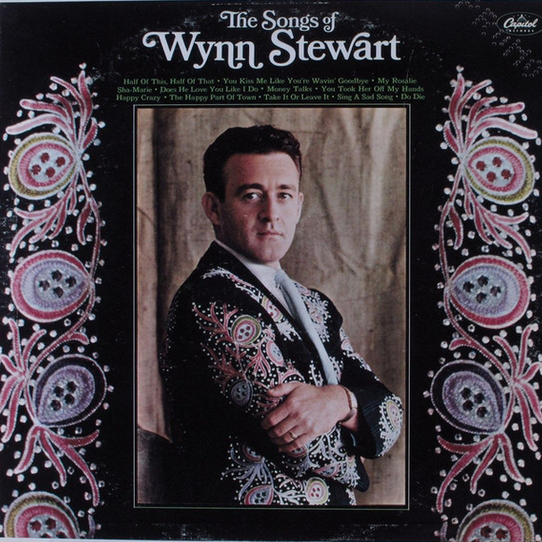
Wynn Stewart's "Happy Crazy" isn't a celebration of mental instability, but rather a darkly romantic exploration of emotional escape. The song's core concept revolves around the protagonist's contemplation of madness as a preferable alternative to the pain of lost love. The lyrics paint a picture of someone on the brink, suggesting that sanity itself is contingent on the return of a significant other. The hook, "happy happy crazy," is a paradoxical state, implying a liberation from heartache achieved through a detachment from reality. It's a desperate bargain: trade a rational mind for the solace of oblivion.
The Napoleon reference is particularly telling. The man who "thought he was Napoleon" isn't mocked, but rather envied. He's found a way to be "happy happy crazy" by constructing his own reality, one free from the burdens of heartbreak. The song subtly suggests that the protagonist sees this as a viable, even desirable, path. The lines about "no heartache no heartbreak and no tears in his eyes" hammer home the seductive appeal of this manufactured bliss. The acknowledgment that "to find his peace of mind I'd have to lose mine" reveals the conscious sacrifice involved. It's not an accident; it's a deliberate choice born of desperation.
The conditional nature of the lyrics is crucial. "But if you come back tonight I might be curable." This isn't a full embrace of madness, but a threat, a plea, a last-ditch effort to reclaim what was lost. The protagonist recognizes the precariousness of their mental state and acknowledges that love is the only anchor preventing a complete descent. The repetition of "without your love I might as well be crazy" underscores the profound impact of this relationship. In essence, "Happy Crazy" is a raw, unflinching portrayal of love's power to both shatter and sustain us. It's a psychological study disguised as a country song, hinting that sometimes, the line between sanity and madness is thinner than we'd like to believe.
 View Artist