Song Meaning
Volkan Konak's "Zinos (Kızlara Türkü)" isn't just a song; it's a lyrical chronicle of a young woman's journey through adolescence and into adulthood, filtered through a distinctly patriarchal lens. The song meticulously maps out the perceived transformations a girl undergoes as she ages, assigning specific attributes and societal expectations to each year. It's a stark, and perhaps unsettling, portrayal of how a woman's value and identity are often defined by her age and her relationship to men within a traditional cultural framework. The refrain, with its seemingly nonsensical syllables, acts as a haunting, almost ritualistic marker of time passing. It punctuates each stage of the woman's life, emphasizing the inexorable march forward. This creates a sense of both inevitability and a subtly unsettling feeling, as if the woman's fate is predetermined by the passage of time.
The lyrics paint a picture where a girl at twelve is like a precious jewel ('Cevahir tasi olur'), suggesting innocence and potential. But as she progresses through her teens, she becomes increasingly defined by her physical attributes ('Saçları yassi olur') and her burgeoning sexuality. By fifteen, she's described as 'asi' (rebellious) towards her father, hinting at the conflicts that arise as she seeks independence. The song then rapidly catalogs the milestones of young adulthood – attracting suitors, reaching full bloom ('Tamam ayvasi olur'), and eventually becoming 'elin mirasi' (someone else's inheritance), alluding to marriage and the transfer of ownership from father to husband.
What makes "Zinos (Kızlara Türkü)" particularly compelling is its unflinching portrayal of societal expectations and the pressures placed upon young women. As the woman enters her twenties and beyond, the lyrics become increasingly cynical. She is described as 'Güzel sarmasi olur' (good at making stuffed grape leaves) implying her domestic skills become her primary value. By twenty-five, she's seen as 'Altin bozmasi olur' (like tarnished gold), perhaps suggesting that her value diminishes as she ages beyond conventional marriageable age. The final line, 'Eger otuz olursa, bana sor nasil olur' (If she turns thirty, ask me how it is), leaves a chilling sense of foreboding, implying that a woman past thirty is somehow undesirable or problematic. The song, therefore, functions as both a celebration and a critique of traditional gender roles, leaving the listener to grapple with the complex and often contradictory expectations placed upon women in society.
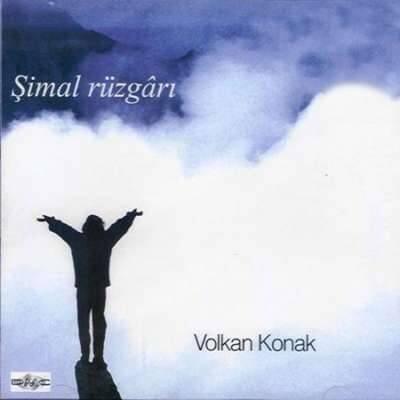
 View Artist