Song Meaning
The lyrics paint a vivid picture of a specific kind of communal grief and revelry. There's a sense that the narrator is observing a familiar scene: when something happens nearby, hearts weep, but the 'maggas' (a term often implying a certain type of streetwise, perhaps melancholic man) still celebrate, albeit with sorrow. This immediate contrast sets a tone of shared experience, where outward celebration masks inner pain, a common thread in certain cultural expressions.
The core tension seems to lie between the narrator's detached observation and the emotional intensity of the scene unfolding. While others are caught up in the 'zeibekiko' – a dance often associated with deep emotion and sometimes despair – the narrator claims to be merely whistling 'the tune of love.' This suggests a deliberate emotional distance, a refusal or inability to fully engage with the collective sorrow and revelry.
The recurring image of the 'baglamas' (a stringed instrument) singing a 'sweet zeibekiko' and then a 'chirping' that is 'always the same' is particularly striking. This repetition, described as a 'chirping,' implies a mechanical, perhaps even hollow, expression of the same emotional theme. The narrator's whistling of 'the tune of love' stands in contrast to this more elaborate, yet seemingly unchanging, musical expression.
Ultimately, the effectiveness of these lyrics stems from their ability to evoke a specific atmosphere of bittersweet communal experience. The narrator's position as an observer, whistling a simple tune while others engage in a complex dance of sorrow and celebration, creates a subtle but powerful commentary on emotional engagement and detachment. The unchanging nature of the music, despite the weeping hearts, highlights a persistent, perhaps inescapable, emotional cycle.
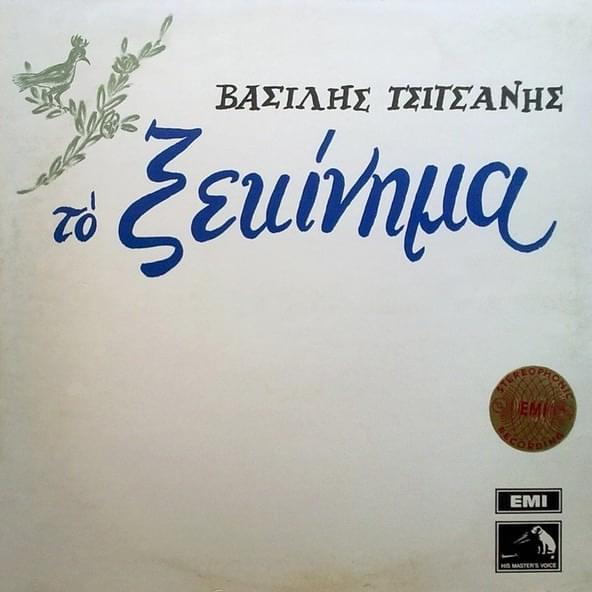
 View Artist