Song Meaning
A spectral presence, described as "the ghost," has arrived at the narrator's home, rattling the gate and silently entering to grasp their hand. This entity is characterized as belonging to people who "live on feeling" and "don't care about anything or anyone." The lyrics immediately pivot from this eerie, almost supernatural intrusion to a profound uncertainty about love. The narrator confesses, "I don't know what love is and who deserves it," suggesting a deep disconnect from conventional understanding or experience of affection.
The central tension arises from the narrator's inability to witness the object of their affection in distress. This manifests in a powerful, repeated refrain: "I can't see you unhappy / I don't want to see you unhappy / I won't see you unhappy." This isn't just a passive wish; it's an active, almost protective stance, driven by a recognition of the "silences" and "hollow sadness" that the narrator knows all too well. The ghost's silent, gripping presence seems to mirror this internal struggle with emotional expression and connection.
The most striking aspect of the craft is the juxtaposition of the spectral "ghost" with the raw, human vulnerability regarding love. The ghost's silent, unfeeling grip contrasts sharply with the narrator's desperate desire for the other person's happiness. The repeated, emphatic declarations of not wanting to see the other person unhappy build to a simple, yet profound, final wish: "I want to see you happy." This direct plea cuts through the earlier ambiguity and the unsettling imagery, revealing the core motivation behind the narrator's emotional paralysis.
These lyrics resonate because they capture a specific kind of empathetic pain. The narrator's struggle isn't about grand romantic gestures but about the quiet, internal burden of witnessing someone else's sorrow and feeling powerless to alleviate it, perhaps even projecting their own emotional difficulties onto the situation. The ghost serves as a potent, albeit ambiguous, metaphor for an overwhelming, perhaps inherited, emotional state that complicates the narrator's understanding and expression of love, ultimately boiling down to a singular, urgent desire for the other's well-being.
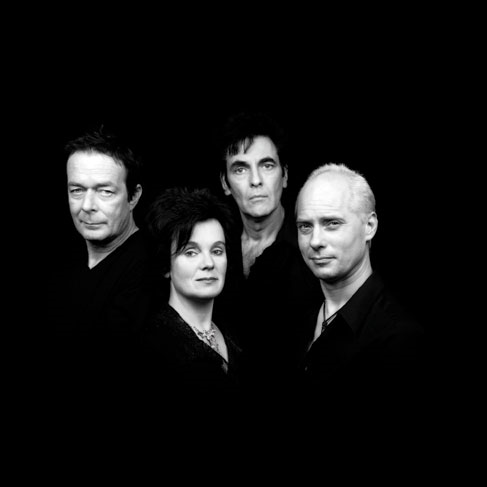
 View Artist