Song Meaning
{"song_id": 12490045, "meaning": "Terry Callier's rendition of \"Cotton Eyed Joe\" isn't the barn-burner you might expect, and that's precisely where its power lies. Stripped of its frenetic energy, the song becomes a haunting meditation on longing, regret, and the elusive nature of happiness. The repeated questioning – \"Where do you come from? Tell me, where do you go?\" – transforms Joe into a symbol of the unknown, a wandering spirit who embodies both promise and disruption. Is he a lover, a drifter, or a figment of the narrator's troubled imagination? The ambiguity is the point. He's a cipher onto which the singer projects their own unresolved desires.
The lyrics hint at a life lived on the edge, a precarious balance between joy and sorrow. \"I been cryin' in the sunshine, I been laughin' in the rain\" speaks to the inherent contradictions of the human experience, the way that pleasure and pain are often intertwined. Callier's phrasing makes it clear: this isn't just about mood swings; it's about the fundamental difficulty of existence. The line \"dyin' is easy, it's livin' that's pain\" isn't mere melodrama; it’s a raw, unflinching acknowledgment of the struggle to find meaning and contentment in a world that often feels indifferent.
Ultimately, \"Cotton Eyed Joe\" functions as a lament for lost opportunities and paths not taken. The final verse – \"If it hadn't a been for Old Cotton Eyed Joe, Sugar, I'd've been married a long time ago\" – reveals the crux of the matter: Joe represents a disruptive force, a catalyst that prevented a more conventional, perhaps more stable, life. Whether he's a scapegoat or a genuine obstacle is left open to interpretation. But Callier's nuanced delivery suggests that the narrator's feelings are complex, tinged with both resentment and a certain wistful affection for the chaos that Joe represents. The song meaning, therefore, rests in this push and pull between the desire for stability and the allure of the unknown."}
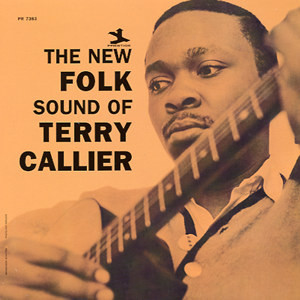
 View Artist