Song Meaning
{"song_id": 12647313, "meaning": "Stephen Stills's \"Amazonia\" isn't just a song; it's a stark ecological warning delivered with a weary sigh. The titular focus, of course, is the Amazon rainforest, presented not merely as a geographical location but as the very source of \"the air we breathe.\" Stills immediately establishes a crisis: the destruction of this vital ecosystem is happening at an alarming rate, so fast that \"in the time it takes to sing this song, another acre's gone.\" It's a punchy, almost off-the-cuff line that underscores the urgency of the situation. The song meaning cuts through any romanticization of environmentalism, acknowledging the complex socio-economic realities at play.
Stills avoids simplistic finger-pointing. He recognizes the local populations, the \"people there,\" are often driven by poverty, unable to \"see the forest for the trees\" in their struggle for survival. The reference to \"Sinterras\" (likely *Seringueiros*, or rubber tappers) highlights the plight of those who depend on the forest for their livelihood, suggesting that blame is misplaced when survival is at stake. The challenge, as Stills sees it, isn't about condemnation but about education and providing viable alternatives. It's about helping them \"realize the damage done\" and offering solutions that allow them to prosper sustainably, taking care of everyone in the region.
The weight of the issue permeates the song. Stills admits that \"simple answers are much harder to accomplish than the rest,\" a sentiment that reflects the frustratingly slow progress of environmental conservation. The line \"there's always someone getting hurt when you have to do what's best\" acknowledges the inevitable sacrifices and difficult choices involved in protecting the rainforest. Ultimately, \"Amazonia\" is a call to action, urging listeners to use their \"imagination\" and \"shoulder to the task\" to save the rainforest \"from ourselves.\" It's a plea for collective responsibility, recognizing that the fate of the Amazon, and perhaps the planet, rests on our willingness to act."}
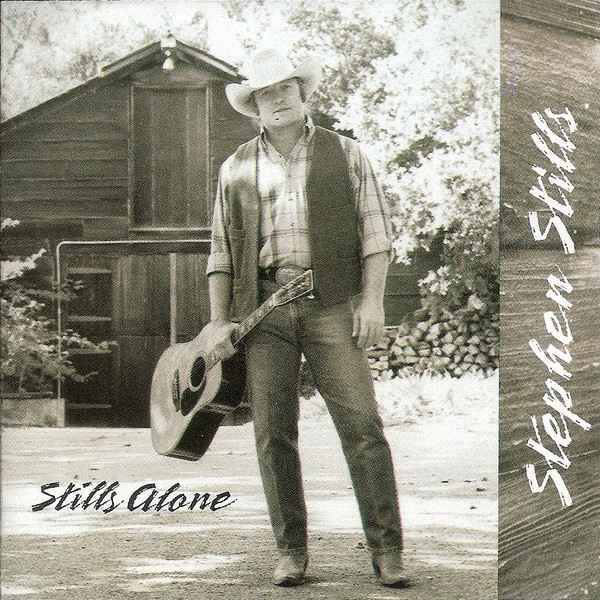
 View Artist