Song Meaning
The lyrics paint a vivid picture of intense, almost divine adoration. The opening lines immediately establish a powerful, burning "focu ardenti" (burning fire) that is the "ciatu di l'arma mia" (breath of my soul). This isn't just affection; it's an all-consuming passion that has deeply penetrated the narrator's mind, suggesting an overwhelming and inescapable infatuation. The repetition of "focu abbastanti" (enough fire) emphasizes the sheer magnitude of this feeling, implying it's more than sufficient to sustain the narrator.
The central tension lies in the narrator's inability to let go of this person, stating "lassariti 'un ti po' ah nissuna amanti" (no lover can leave you). This highlights a possessive or perhaps fated connection, where separation seems impossible. The question "Cu' ti l'ha fattu 'st'occhi ah risplinnenti?" (Who made these shining eyes?) elevates the beloved to a celestial level, with the narrator attributing their creation to "lu me Diu ah cu li so' santi" (my God with his saints). This divine attribution transforms the beloved from a mere object of affection into something sacred and divinely crafted.
The most striking craft element is the consistent invocation of religious imagery to describe romantic love. The beloved's eyes are not just beautiful; they are divinely made. The narrator's love is a "burning fire" and the "breath of my soul." This fusion of the sacred and the profane creates a unique intensity, suggesting that this love is a spiritual experience as much as an earthly one. The final lines, "Ora, figliuzza 'un amarinni tanti / Bedda ti amu jù e sugnu abbastanti" (Now, my dear, don't love me so much / Beautiful, I love you and I am enough), introduce a curious plea, perhaps a humble acknowledgment of the overwhelming nature of their own devotion, or a gentle assertion of their sufficiency as a lover despite the divine comparisons.
This lyrical approach is effective because it grounds an almost overwhelming romantic obsession in language that suggests destiny and divine intervention. By framing the beloved as a creation of God and the love as a soul-sustaining fire, the narrator elevates their feelings beyond simple infatuation to a profound, almost spiritual connection. The contrast between the intense, almost desperate adoration and the final, softer plea creates a complex emotional portrait that feels both deeply personal and mythic.
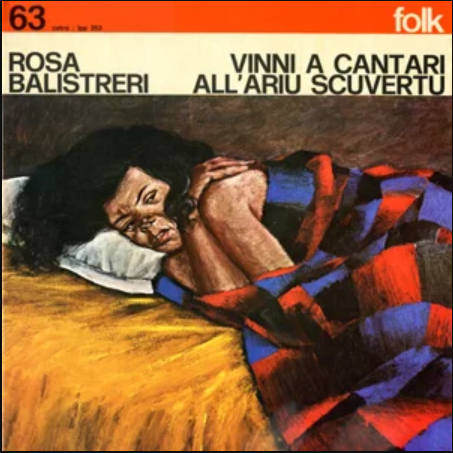
 View Artist