Song Meaning
This song directly addresses mothers, contrasting the fate of their children based on their location. It opens with a stark command: "Mothers who have children at the Badia, do not weep for them, for they are saved." This immediately sets up a dichotomy, suggesting a form of salvation or protection for those at the Badia, implying their situation is preferable to others.
The central tension arises from the plea to "Weep for those of the Vicaria, who are deprived of freedom." The lyrics then explicitly call out mothers with "children imprisoned," urging them to "Go to the Vicaria and see them." This direct instruction highlights the suffering and lack of liberty experienced by these children, creating a powerful emotional contrast with the implied safety of the Badia.
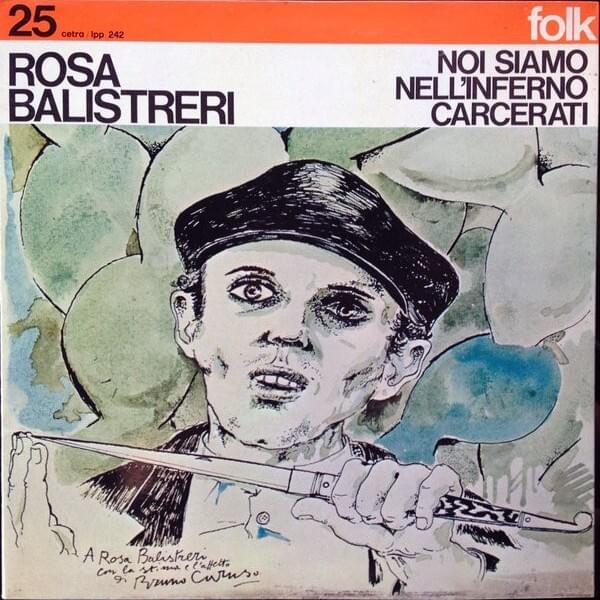
The most striking element is the radical redefinition of suffering and salvation. The narrator declares, "We are condemned in hell," referring to those in the Vicaria, while simultaneously addressing the mothers outside, "and you mothers outside, weep." This framing inverts typical notions of hell and damnation, suggesting that the true suffering lies not just in imprisonment but in the grief and helplessness of those left behind, or perhaps that the imprisonment itself *is* hell.
This lyrical construction is effective because it forces a visceral understanding of confinement and maternal anguish. By juxtaposing the "saved" at the Badia with the "condemned in hell" at the Vicaria, and directly involving the mothers in this stark reality, the song creates an unforgettable image of injustice and despair. The repeated command to witness the imprisoned children underscores the inescapable nature of their plight and the mothers' shared burden.
 View Artist