Song Meaning
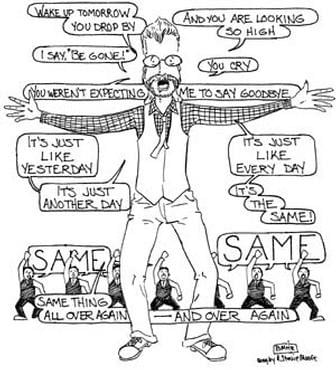
R. Stevie Moore's "Toss It Up" isn't so much a song as it is a perfectly preserved specimen of lo-fi ennui. The track, seemingly dashed off with casual disregard, captures the psychic weight of repetition and the low-grade anxiety of interpersonal disappointment. The opening lines immediately establish a dynamic of expectation and frustrated recoil: "Wake up tomorrow you drop by / And you are looking so high." This isn't a grand betrayal; it's the weariness of dealing with someone perpetually not meeting an unspoken standard. The abrupt "I say begone you cry / You weren't expecting me to say goodbye" is less a declaration of independence than a sigh of exasperation. It's the sound of boundaries being (ineffectually) drawn.
The core of the song meaning resides in its cyclical nature, both lyrically and structurally. The litany of "It's just like yesterday / It's just another day / It's just like everyday" becomes a mantra of stagnant routine. Moore isn't lamenting a specific event; he's trapped in the relentless churn of sameness, amplified by the echo of "The same thing all over again / And over again." This repetition isn't just a stylistic choice; it's the very essence of the emotional state being conveyed. The song's sonic texture—raw, unpolished, almost carelessly executed—only reinforces this sense of weary resignation.
Ultimately, "Toss It Up" functions as a miniature study in the psychology of low expectations. The lines "Come back the next day, oh my / You haven't done a single thing" aren't delivered with anger, but with a kind of defeated acceptance. The singer *expects* disappointment. This self-fulfilling prophecy bleeds into the admission, "I'm expecting too much / I cannot help, but I'm losing touch." The final lines, "This is the last day I've got / This is the last day you've got / This is not quite the same," offer a sliver of hope, or perhaps just a slightly altered shade of despair. The meaning of the song rests in the tension between the desire for change and the numbing weight of the status quo. It's a portrait of emotional inertia, rendered with the charmingly off-kilter sensibility that defines R. Stevie Moore's work.
 View Artist