Song Meaning
The lyrics immediately establish a profound disconnect, stating "O Brazil não conhece o Brasil / O Brasil nunca foi ao Brazil." This isn't just about geography; it suggests a nation unaware of its own identity, its own essence. The repetition of "Brazil" with varying capitalization and context hints at different facets of the country – perhaps the idealized versus the real, or the superficial versus the deep.
The central tension arises from this self-ignorance, escalating to "O Brazil não merece o Brasil / O Brazil tá matando o Brasil." This is a stark accusation, implying a destructive relationship between the people and their homeland. The lyrics present a nation actively harming itself, a self-inflicted wound born from a lack of understanding or appreciation for what Brazil truly is.
A striking element is the juxtaposition of indigenous-sounding names and natural elements like "Tapir, jabuti" with modern, urban, or culturally specific references like "jobim-açu," "bachianas," and specific Rio de Janeiro neighborhoods. This creates a sonic and conceptual collage, mirroring the fragmented and perhaps chaotic nature of Brazilian identity as perceived by the narrator. The rapid-fire listing feels like an attempt to capture a vast, diverse, and perhaps overwhelming reality.
This lyrical approach works by overwhelming the listener with a dense tapestry of sounds and references, forcing them to confront the complexity and contradictions within Brazil. The direct, almost accusatory statements, combined with the evocative, sometimes jarring, list of names and places, create a powerful sense of urgency and a plea for recognition. It’s a call to acknowledge the multifaceted reality of Brazil, both its natural beauty and its urban sprawl, its cultural heritage and its present struggles.
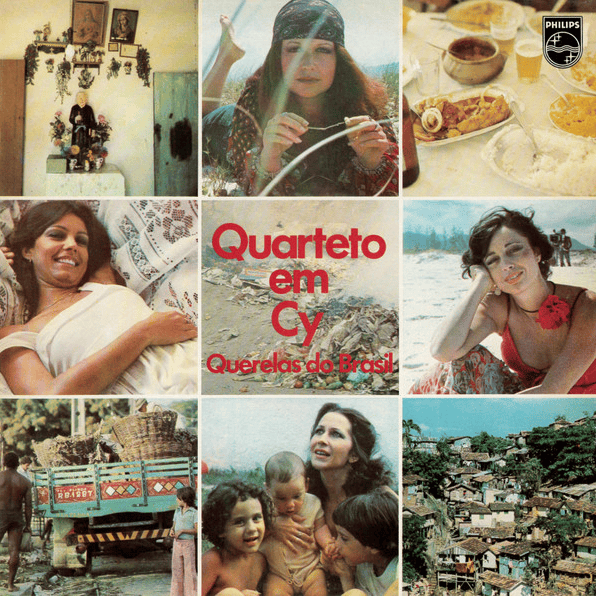
 View Artist