Song Meaning
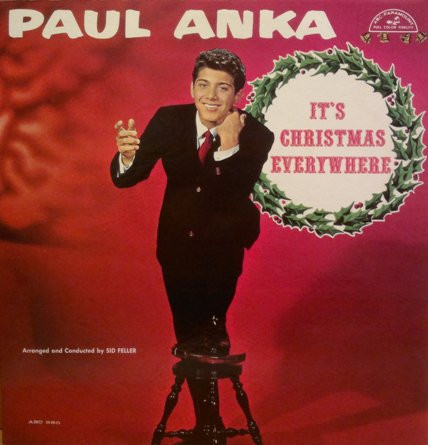
{"song_id": 10769616, "meaning": "Paul Anka's rendition of \"The Christmas Song,\" more famously sung by Nat King Cole, paints a Norman Rockwell-esque portrait of Yuletide bliss, one readily consumed by the masses. But beyond the chestnuts and carols, the song’s enduring appeal lies in its distillation of collective fantasy. It’s not just about Christmas; it’s about the *idea* of Christmas, meticulously curated and presented as universally accessible. The lyrics don't delve into religious theology, instead focusing on secular symbols—Santa, reindeer, gifts—that function as emotional triggers, bypassing critical thought and activating a sense of childlike wonder. This creates a shared psychological space where anxieties are temporarily suspended in favor of communal joy. The genius of \"The Christmas Song\" isn't its lyrical complexity, but rather its emotional efficiency.
The song functions as an auditory comfort object, triggering deeply ingrained positive associations. Lines like \"folks dressed up like Eskimos\" and \"tiny tots with their eyes all aglow\" tap into archetypal images of winter warmth and familial love. This triggers what psychologists might call 'nostalgia proneness' -- a yearning for an idealized past, which, in turn, strengthens social bonds. The lyric “every mother’s child is gonna spy / To see if reindeer really know how to fly” perfectly captures the wide-eyed optimism of childhood, a state of mind the song invites listeners to revisit.
Ultimately, “The Christmas Song” thrives because it offers precisely what its title promises: a sonic encapsulation of Christmas itself. Paul Anka's version, while faithful to the original, reminds us how potent simple language can be when deployed to evoke powerful emotions. It's a reminder that even amidst the commercial frenzy, the core desire for connection and shared joy remains the season's driving force. The repeated refrain, \"Merry Christmas to you,\" isn't just a greeting; it's an invitation to participate in a shared fiction, a collective agreement to believe, at least for a little while, in the magic of Christmas."}
 View Artist