Song Meaning
The opening lines paint a stark picture of relentless motion, with the "wagons creaking" and "rails whining" to a "monotonous rhythm." The narrator sits in a corner, absorbing this "rock and roll" of the wheels, a sound that becomes a grim realization: "Now I know what everyone knows / This train stops nowhere." It's a moment of clarity, accepting an inescapable, forward-driving momentum.
The perspective shifts to a retrospective self-assessment. The narrator acknowledges past foolishness, finding a strange contentment in simply being a passenger on this "20th-century track." This acceptance of the present, however bleak the destination, is framed as a source of happiness. The refrain, "This train stops nowhere," becomes less a statement of despair and more a condition of existence.
The introduction of a "kind conductor" telling jokes to passengers adds a layer of surreal detachment. The journey is presented as unending, with the conductor's joviality contrasting sharply with the underlying finality of the train's non-stop nature. The repeated "It doesn't stop" hammers home this sense of perpetual, unalterable movement, a journey without respite or destination.
Ultimately, the lyrics suggest a profound acceptance of loss and the passage of time. The "last of my illusions" fades as the wagons disappear into the distance. Despite paying a "high price" for moments with someone, there's no regret. The narrator has come to terms with the fact that, like the train, life moves forward relentlessly, and this understanding, this acceptance of the non-stop journey, brings a peculiar peace.
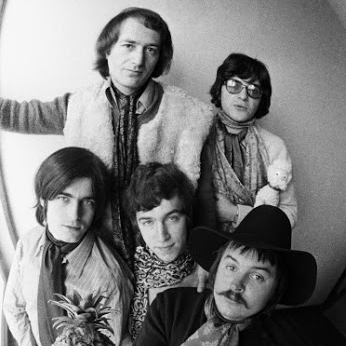
 View Artist