Song Meaning
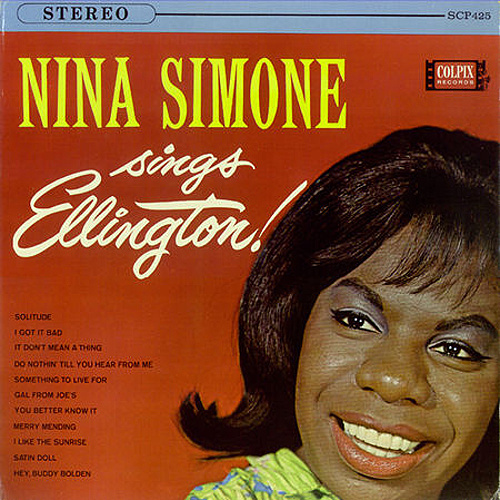
{"song_id": 12413198, "meaning": "Nina Simone's \"You Better Know It\" isn't a plea for affection; it's a declaration of ownership, delivered with the force and simmering intensity that defined her. The lyrics, deceptively simple, paint a portrait of a relationship balanced precariously on a tightrope of devotion and control. The opening lines, \"I belong to you, and I know I show it / You belong to me, baby, you'd better know it,\" establish the terms: this isn't a suggestion, it's a royal decree. Simone isn't asking for commitment, she's demanding acknowledgment of a pre-existing, unbreakable bond. The \"sugar spice and sweet honey\" isn't a gesture of vulnerability, but a reminder of what's at stake.
The bridge delves deeper into the psychology of this dynamic. \"Not for love or money, I'd do most anything / Just to amuse you\" reveals a willingness to perform, to contort oneself to maintain the other's interest. But the subsequent lines, \"But there's nothing that I wouldn't do / Thought that I would ever lose you,\" hint at a darker undercurrent—a fear of abandonment that fuels the performance. This isn't just about pleasing a lover; it's about preemptively guarding against a perceived threat. The repeated phrase, \"You'd better know it,\" becomes less a statement of fact and more a desperate mantra, a self-reassurance masked as a command.
Ultimately, \"You Better Know It\" is a study in the complexities of power within a relationship. The \"game\" Simone refers to isn't frivolous; it's a high-stakes battle for emotional survival. \"I play for keeps,\" she asserts, underscoring the seriousness of her intent. The instrumental break offers a moment of respite, a brief pause before the final reiteration of her demands. Simone's delivery, both commanding and vulnerable, elevates the song beyond a simple love declaration. It's a raw, unflinching exploration of the lengths to which one will go to maintain control, driven by a primal fear of loss. This song reveals the subtle ways we negotiate power and vulnerability in our closest relationships, and the often-uneasy balance between devotion and control."}
 View Artist