Song Meaning
Nina Hagen's "So Bad," especially in the Utah Saints Radio Edit, isn't just a song; it's a primal scream against the bleakness of the modern world. Hagen, the godmother of German punk, juxtaposes personal strength and almost messianic self-image against a litany of societal ills, creating a fascinating tension. The repeated assertion of being 'so strong' and 'so good' reads less as ego and more as a desperate self-affirmation, a bulwark against the encroaching darkness she meticulously catalogs. It's as if Hagen is trying to convince herself (and us) that individual power can somehow counterbalance global decay. The almost manic energy of the delivery reinforces this sense of urgency. The song meaning is a complex interplay between personal agency and global despair.
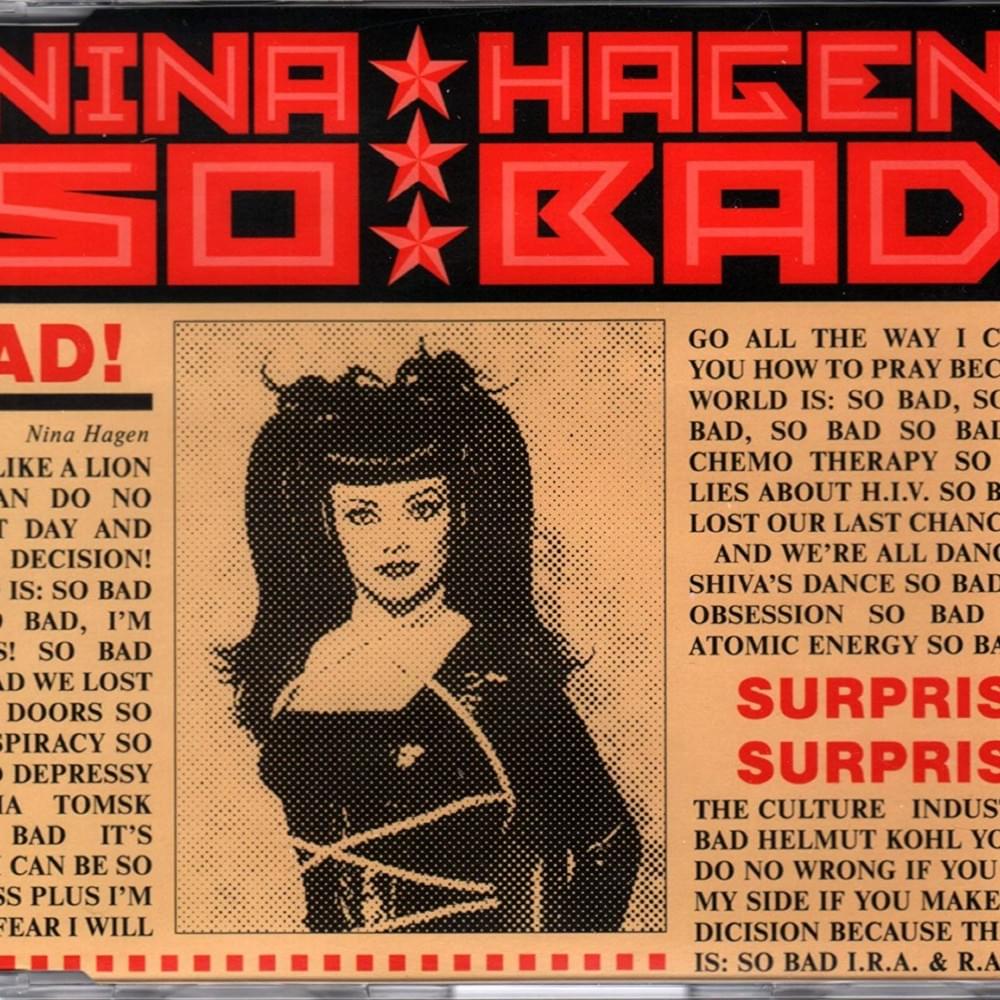
What sets "So Bad" apart is its unflinching laundry list of horrors. Hagen doesn't shy away from specifics, name-checking 'deadly chemotherapy,' 'lies about HIV,' 'genetic obsession,' and even 'Helmut Kohl,' the former German chancellor. This isn't vague angst; it's a pointed indictment of the late 20th century's failures – medical, political, and cultural. The references to the I.R.A., R.A.F., and 'Yugoslavian rape' further anchor the song in a specific historical moment, a time of intense geopolitical turmoil. The repeated line 'And we're all dancing Shiva's dance' is particularly evocative, suggesting a world on the brink of destruction, caught in a frenzied, almost celebratory spiral towards oblivion.
Ultimately, "So Bad" is a challenging listen because it offers no easy answers. Hagen's defiant optimism feels almost performative, a way to cope rather than a genuine belief in salvation. The question 'What can all of this mean?' at the song's close hangs in the air, unanswered. It's a reflection of the overwhelming nature of the problems she presents. The song, rather than offering solutions, serves as a cathartic release, a visceral expression of frustration and despair in the face of a world seemingly intent on self-destruction. The song's impact is amplified by the danceable Utah Saints Radio Edit, contrasting the grim lyrics with an upbeat tempo, creating a sense of cognitive dissonance that mirrors the conflicting emotions at the heart of the song.
 View Artist