Song Meaning
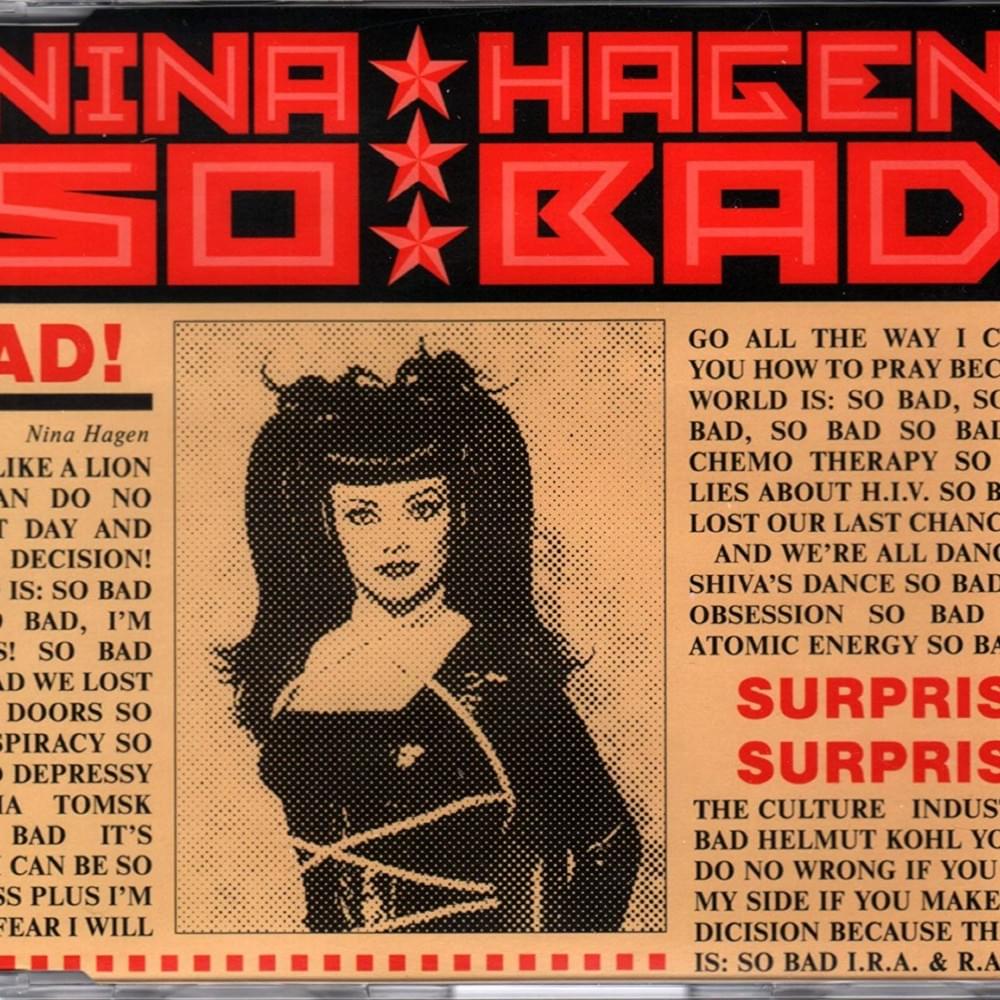
Nina Hagen's "So Bad" (Radio Edit) isn't just a song; it's a sonic Molotov cocktail hurled at the complacency of modern existence. The track opens with a jarring declaration of invincibility, a twisted battle cry that immediately feels ironic given the litany of horrors to follow. Hagen’s delivery, teetering between righteous fury and sardonic detachment, paints a portrait of a world drowning in its own contradictions. The repeated mantra of being "so strong" and incapable of wrong hints at the seductive allure of ideological certainty, a dangerous path given the song's subsequent indictment of global ills. It's a dare to the listener: how long can you maintain such blind faith in the face of overwhelming evidence? The song meaning is less about offering solutions and more about forcing confrontation.
The lyrical onslaught that forms the core of "So Bad" functions as a rapid-fire catalog of societal decay. From the trivial ("diet soda") to the catastrophic ("Misused atomic energy"), Hagen doesn't discriminate in her critique. The litany of complaints—wars, political corruption, historical atrocities like "The Yugoslavian rape" and "Nazi lunacy"—creates a sense of overwhelming dread. The references to I.R.A. and R.A.F. are not endorsements but further examples of human conflict. The inclusion of pop culture elements, like the death of Jim Morrison and "the culture industry," blurs the lines between the genuinely tragic and the manufactured outrage that dominates the media landscape. Hagen suggests that we are all, in some way, complicit in the "badness."
Ultimately, "So Bad" is a visceral expression of disillusionment and a call for awareness. The abrupt ending, with its plea for "no guns, nothing," is not a naive call for pacifism, but a desperate yearning for an alternative to the destructive cycles of violence and apathy. The "Radio Edit" designation is particularly biting; Hagen seems to be asking how such a raw, unfiltered condemnation of society can even be palatable to mainstream audiences. The German interlude (if indeed it is present in the radio edit) further roots the song in a specific cultural and historical context, but the anxieties it expresses are universal. This isn't just a song; it's a sonic manifesto for a generation grappling with the weight of the world's problems.
 View Artist