Song Meaning
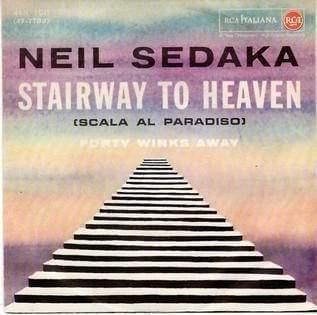
Neil Sedaka's "Stairway To Heaven" isn't some grand, sprawling epic; it's a concentrated dose of early rock 'n' roll infatuation. The song's architecture is deceptively simple: a boy, utterly smitten, pledges hyperbolic devotion to his girl. The repeated "Climb up way up high" isn't just filler; it's the mantra of a love-struck teenager, the sonic equivalent of doodling her name in a notebook. The lyrical content hinges on this central conceit: the object of his affection isn't merely desirable, she's transcendent, an "angel" residing in a self-constructed paradise. It's less about religious aspiration and more about the dizzying, almost disorienting effect of first love. The promise to "build a stairway to heaven" is a classic romantic overstatement, a way to express the feeling that nothing is too extreme or impossible to win her favor. It's a testament to the power of young love to reshape reality, to turn the mundane into the miraculous.
Sedaka taps into a potent psychological truth: the tendency to idealize a romantic interest, particularly in adolescence. The lyrics aren't just saccharine; they reflect a genuine emotional state. The "stairway to heaven" becomes a metaphor for the lengths one will go to attain and maintain that idealized connection. The reference to going "over the rainbow" reinforces this theme of escapism and the creation of a private, love-filled world. The bluebirds, traditionally symbols of happiness and optimism, further paint a picture of a blissful, self-contained reality. The repeated chorus acts as an affirmation, solidifying the protagonist's commitment to this idealized vision.
The slight undercurrent of desperation in the line "You're going to drive me out of my mind" hints at the potential for this infatuation to become all-consuming. While the song is overwhelmingly positive, this fleeting moment of anxiety suggests that such intense idealization can be both exhilarating and destabilizing. "Stairway To Heaven," then, is a snapshot of early romance at its most heightened, a testament to the intoxicating power of first love and the lengths we'll go to in pursuit of it. It's a celebration of the naive, unconditional devotion that defines those early experiences, even with the acknowledgment that such heights of emotion might be unsustainable.
 View Artist