Song Meaning
Neil Sedaka's "You Mean Everything to Me" isn't just a love song; it's an anthem of dependency, coated in the saccharine sounds of early rock and roll. The lyrics, while seemingly straightforward, paint a portrait of someone whose entire sense of self is inextricably linked to another person. The opening lines, "You are the answer to my lonely prayer / You are an angel from above," immediately establish a dynamic where the object of affection isn't just a partner, but a savior, rescuing the narrator from a pre-existing state of profound loneliness and existential emptiness. This sets the stage for a relationship built not on mutual growth, but on a desperate need for external validation.
The core of the song's meaning resides in the fragility it betrays. The narrator's declaration, "I don't know how I ever lived before / You are my life, my destiny," is less a romantic pronouncement and more a confession of utter reliance. The threat of loss, articulated in the lines about "lonely tears to cry" and a sun that will "never shine again," isn't just heartbreak; it's the potential annihilation of the narrator's world. This extreme dependence hints at deeper psychological issues, perhaps stemming from low self-esteem or a fear of abandonment. The love expressed isn't necessarily a healthy, balanced emotion, but a desperate clinging to someone perceived as essential for survival.
Ultimately, "You Mean Everything to Me" is a fascinating, if somewhat unsettling, exploration of co-dependency disguised as a heartfelt ballad. Sedaka's earnest delivery only amplifies the underlying message: the narrator isn't just expressing love, but a profound and potentially unsustainable need. The repeated plea to "hold me close and never let me go" underscores the precariousness of this emotional state, revealing a vulnerability that resonates even within the song's seemingly simple structure. While the melody might evoke nostalgia, the song's lyrical content offers a darker, more complex perspective on the nature of love and self-worth.
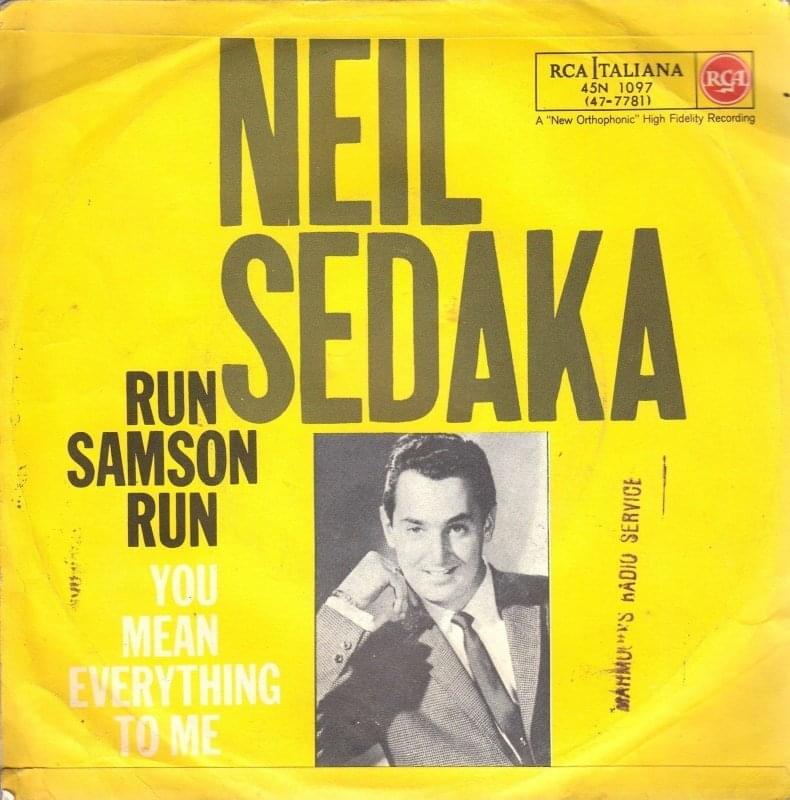
 View Artist