Song Meaning
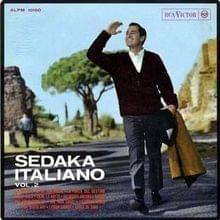
{"song_id": 15395930, "meaning": "Neil Sedaka's \"I Primi Giorni\" isn't just a song; it's a masterclass in the raw, exposed nerve of early heartbreak. The track, sung in Italian, immediately plunges us into the agonizing initial days following a separation. It's a space where memories aren't nostalgic comforts but rather cruel reminders, each one a fresh twist of the knife. The lyrics speak of the difficulty in forgetting \"the voice, the face, the eyes of a love,\" painting a vivid picture of a mind haunted by the recent past. Sedaka isn't offering platitudes or promises of future healing; he's knee-deep in the immediate pain. The repetition of \"Sono questi primi i giorni...i più brutti da passar\" (These are the first days...the worst to get through) underscores the relentless, cyclical nature of grief in its early stages.
The song's emotional weight is amplified by the contrast between the singer's unwavering love and the uncertainty of reciprocation. The lines \"Forse tu non mi amasti mai\" (Maybe you never loved me) and \"io ti amai e so che soffrirò\" (I loved you and I know I will suffer) highlight the vulnerability and potential imbalance within the relationship. This asymmetry is a key component of the song's meaning, suggesting a love that was perhaps idealized or unrequited to some degree. The juke-box playing \"Le canzoni che tu amavi\" (The songs that you loved) serves as a potent symbol, turning everyday experiences into triggers for painful memories. It's a subtle yet effective way of illustrating how heartbreak can permeate even the most mundane aspects of life.
Ultimately, \"I Primi Giorni\" resonates because it doesn't offer easy answers or resolutions. The lyrics analysis reveals a profound understanding of the messy, disorienting reality of loss. The singer is grappling with the possibility that his love was not returned, a realization that compounds the pain of separation. The repeated assertion that \"Non è facile dimenticar\" (It is not easy to forget) is not a lament but a stark acknowledgement of the difficult journey ahead. Sedaka captures the essence of heartbreak not as a singular event, but as a process—a series of \"first days\" that must be endured, one painful moment at a time."}
 View Artist