Song Meaning
The lyrics open with a stark, almost absurd apology to God, not for living, but for being born and for not being dead. This immediately establishes a profound sense of self-loathing and existential despair. The narrator confesses to being a "terrible person" and "scum," trapped in a "six-tatami mat world" that feels like their entire universe. The dominant tone is one of deep personal inadequacy and isolation.
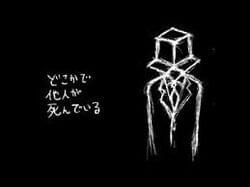
The central tension arises from the jarring contrast between the narrator's intensely personal suffering and the distant, abstract suffering of others. The repeated phrase "Somewhere out there, someone else is dying" is immediately undercut by "It has nothing to do with me." This isn't just indifference; it's a deliberate, almost performative detachment, highlighting the narrator's inability to connect with or even acknowledge the broader human experience of loss beyond their immediate, self-imposed confinement. The subsequent line, "It's not lonely at all," further emphasizes this emotional void.
The most striking aspect of the craft is the relentless repetition of "It's sad, it's sad" and the abstract "Blue, blue, blue." This repetition, especially of "sad," feels less like genuine grief and more like a hollow echo, a learned response the narrator can't truly feel. The "Blue" could suggest melancholy, but its abstract nature, devoid of context, mirrors the narrator's own detachment from external reality. The final, almost resigned "Is this okay?" after confessing to being happy, underscores the deep-seated guilt and confusion about their own emotional state relative to the world.
This song hits hard because it captures a specific, uncomfortable truth about modern alienation. The narrator's self-hatred is so consuming that it paradoxically shields them from empathy, creating a feedback loop of isolation. The lyrics don't offer easy answers or catharsis; instead, they present a raw, unflinching portrait of someone so lost in their own internal landscape that the death of strangers becomes a mere abstract observation, a confirmation of their own emotional paralysis.