Song Meaning
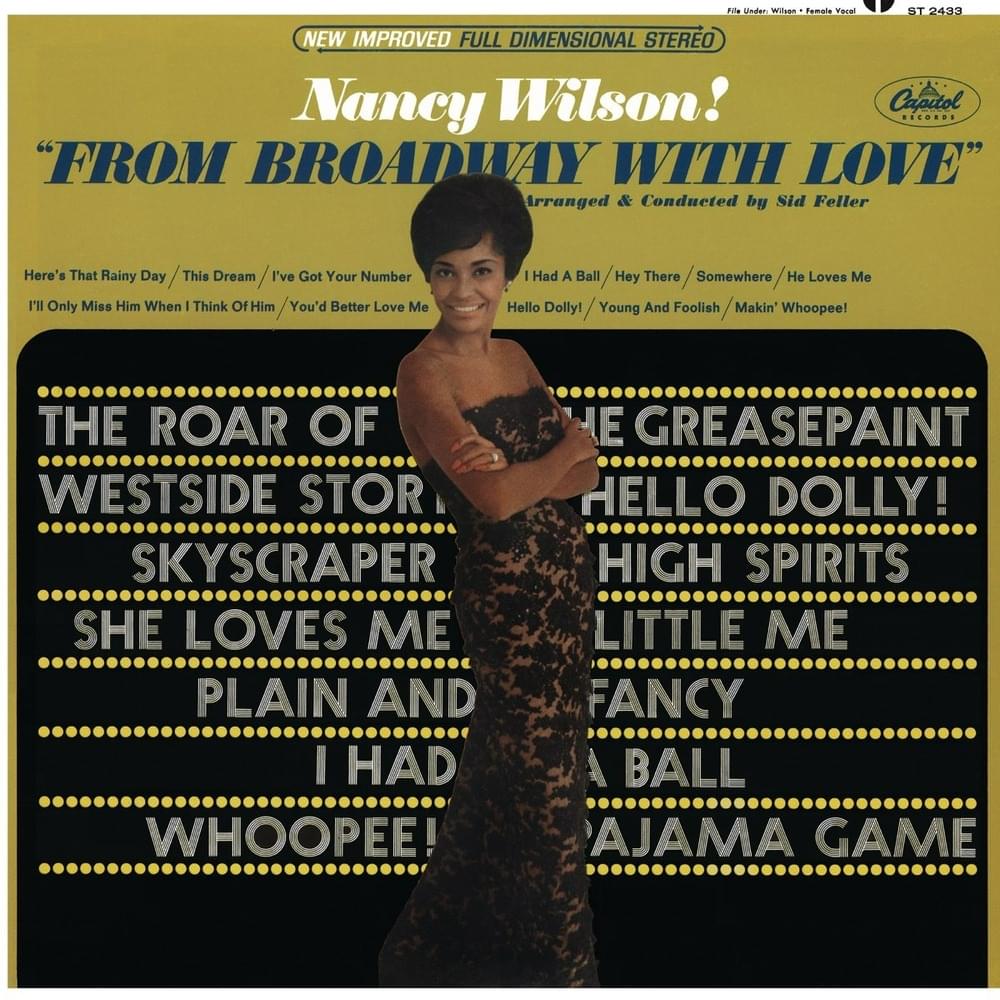
Nancy Wilson's rendition of "Makin' Whoopee" isn't just a jaunty tune; it's a sardonic look at the gap between romantic ideals and the messy realities of marriage. The song deftly walks the line between celebration and cautionary tale, using the euphemism "makin' whoopee" to represent not only the act of love but the entire societal performance surrounding marriage and its consequences. It's a knowing wink to the audience, suggesting that what starts as joyous abandon often morphs into domestic drudgery and financial entanglement. The initial verses paint a picture of blissful ignorance: the nervous groom, the showering of rice, the promise of a 'sunny honeymoon.' Yet, even here, the repetition hints at a cyclical, almost mechanical nature of these events, implying a preordained path. It's all very picture-perfect, until it isn't. The bridge sections, with their imagined 'little love nest,' become increasingly ironic as the song progresses.
The shift occurs subtly, but unmistakably. The man, once eager, is now 'washin dishes, baby clothes,' a far cry from the romanticized vision. The lyrics pointedly state, 'That's what you get folks, for makin' whoopee,' driving home the idea that every action has its reaction. The song then descends into the realm of financial woes and legal battles. The line about the judge ordering the man to pay six thousand to his wife after making only five is a sharp commentary on the economic realities of divorce and the often-unequal power dynamics within marriage. It's a cynical, almost Brechtian moment that pulls back the curtain on the harsher aspects of commitment.
Ultimately, Wilson's interpretation of "Makin' Whoopee" serves as a wry observation on the human condition. It's a song about the enduring tension between desire and responsibility, between the initial thrill of romance and the long-term grind of maintaining a relationship. The repeated warning, 'Don't forget folks, that's what you get folks, for makin' whoopee,' isn't necessarily a condemnation, but rather a knowing acknowledgment of the inherent contradictions and compromises involved in the pursuit of love and happiness within the framework of marriage. It suggests that while the 'whoopee' might be fun, the aftermath is a complex and often unpredictable journey.
 View Artist