Song Meaning
The lyrics paint a picture of a life lived with a constant undercurrent of struggle and existential questioning, set against a backdrop of everyday realities. The narrator recalls finding joy in old streets, awakened by a voice from the past, but this is immediately contrasted with the cyclical nature of days: "Yine sabah yine dün." This sets up a feeling of being trapped in a complex equation, where the narrator's inner world is a singular type for a secondary world. The passage of time is framed as finite, with a stark image: "bir oda üç pencere eşittir ömre her gece" (a room, three windows equals a lifetime every night), emphasizing a sense of confinement and the relentless march of existence. The narrator describes a body plagued by headaches from constant questioning, yet still observing rights with elegance, while also sensing "hasetleri" (envies) from the outside, alongside the worries of making a living and the struggles of ordinary people. The contrast between having little – "Cebimde beş kağıt, dört poğaça bir ayran" (Five bills in my pocket, four pastries, one ayran) – and feeling "hezeyan" (delirium) suggests that even basic sustenance is imbued with a profound, almost overwhelming emotional weight.
The central tension arises from the narrator's internal state versus external pressures and a deep-seated weariness. Despite the outward appearance of being a character, "alaca yada bembeyaz" (mottled or pure white), the narrator admits to a persistent inner fire, a sleeplessness that contradicts any simple categorization. The lyrics suggest a profound disconnect between the self and the world, where "hüzün uzak kalır haykırışın mağarasına" (sadness stays far from the cave of outcry) is immediately dismissed as a lie, implying that sadness is, in fact, a constant companion born from scarcity. This internal conflict is further amplified by the second verse, which begins with a sensory detail, "Çayın kokusuyla büyütüldü ruhum" (My soul was raised with the smell of tea), grounding the narrator in a specific cultural context (Şehr-i Samsun). However, this personal history is juxtaposed with a feeling of being crushed by "tonlarca yük altında" (under tons of weight), even as the spirit aimed for depth, like Gandhi. The rejection of Victor Hugo's "Sefiller" (Les Misérables) is particularly telling, hinting at a weariness with stories of suffering that perhaps mirror too closely the narrator's own lived experience, leading to a desire to simply "uyu" (sleep).
The most striking craft element is the recurring motif of confinement and the distortion of time and space. The initial image of "bir oda üç pencere" (a room, three windows) transforms in the second verse to "Odandasın 3 pencere kapalı" (You are in the room, 3 windows closed), signifying a shift from a potentially expansive view of life to a complete shutdown of external perspective. This claustrophobia is compounded by the idea that thoughts and dreams become entangled: "Düşündükçe bu hayallerin tek halatta sarılır" (As you think, these dreams wrap around a single rope). The final lines, with the alarm ringing while the narrator is asleep with the light on, encapsulate the persistent, inescapable nature of their anxieties. The question, "neydi telaş söyle bana neydi telaş" (what was the rush, tell me what was the rush), echoes a profound sense of bewilderment and a questioning of past actions or motivations, suggesting that the entire experience, though felt intensely and closing slowly, was perhaps a frantic, ultimately unresolved, rush.
These lyrics resonate because they capture the exhausting duality of a life lived with intense internal awareness amidst external hardship and existential fatigue. The narrator doesn't just describe struggle; they embody it through vivid, often unsettling, imagery and a palpable sense of weariness. The shift from an open, questioning existence to a closed-off, trapped state, marked by the windows, powerfully conveys a descent into internal struggle. The final, unresolved alarm and the lingering question about the rush leave the listener with a profound sense of the narrator's ongoing, unresolved internal battle, making the emotional weight of their experience deeply felt.
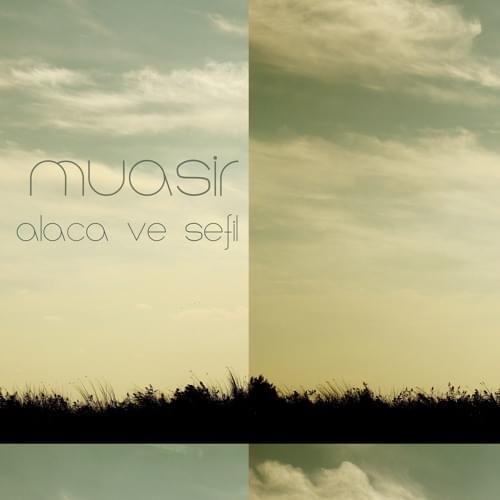
 View Artist