Song Meaning
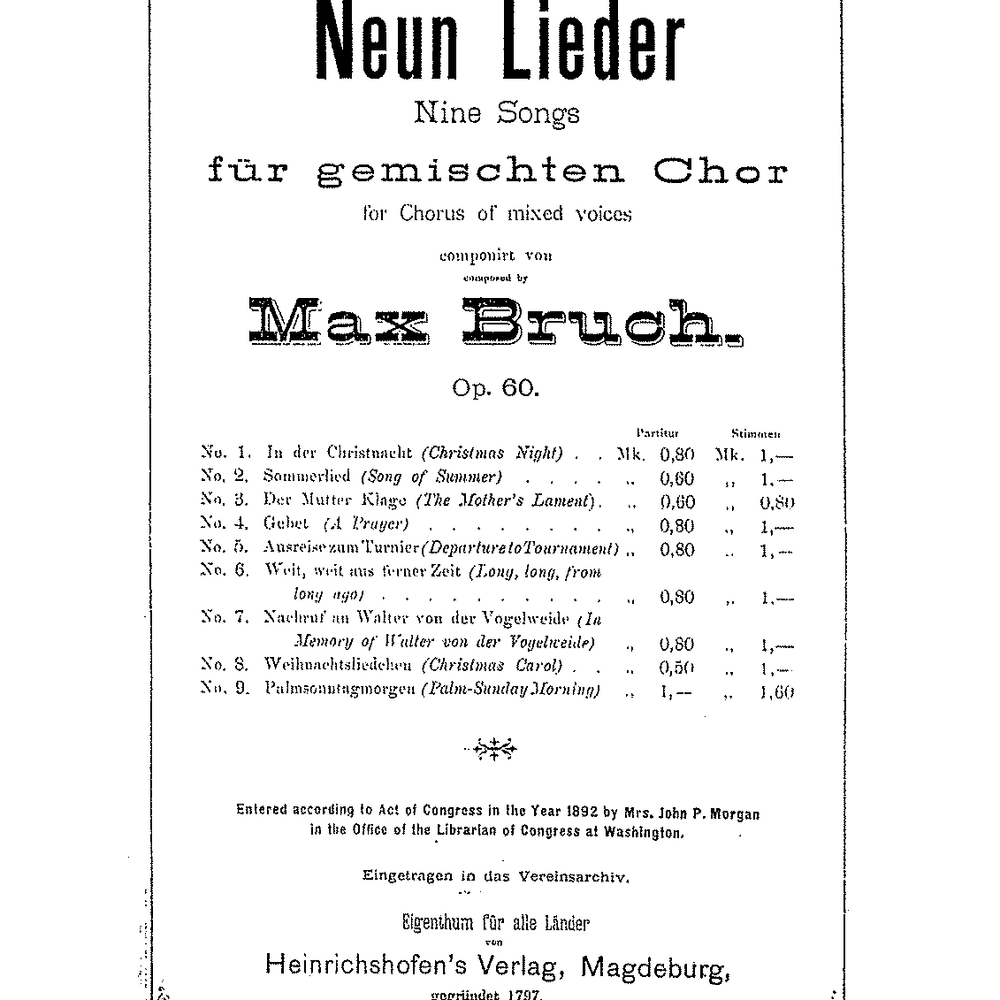
The lyrics paint a picture of a mother's profound grief, contrasting her child's past purity with her present sorrow. The opening lines establish a tender, almost ethereal image of the child, described as "mild wie der Abendschein" (mild as the evening glow) and "sanft wie Taubenaug'" (gentle as a dove's eye). This idyllic portrayal is immediately undercut by the mother's anguished cry, "o mein Kind, o mein Kind!" and the heartbreaking realization that her child's heart "bräche über mein Geschick" (would break over my fate).
The central tension lies in the mother's unbearable loss and the impossibility of future joy. She yearns to see her child smiling, a vision of "Glück" (happiness), but acknowledges "Freude kehrt mir nimmer her" (joy never returns to me). The repetition of "o mein Kind, o mein Kind!" emphasizes the obsessive nature of her mourning, a constant echo of her lost love.
The most striking element is the stark contrast between the remembered beauty of the child and the mother's current, unending despair. The lyrics move from a serene past to a desolate present, where the mother "sinnt mein Herz zurück" (my heart muses back) only to face the devastating finality: "ach! ich seh' dich nimmer, nimmermehr!" (alas! I see you never, nevermore!). This absolute declaration of permanent separation is the core of the lament.
This lament's power stems from its directness and the raw emotion conveyed through simple, yet potent imagery. The gentle descriptions of the child make the mother's subsequent pain feel all the more acute. The finality of "nimmermehr" leaves no room for hope, creating a deeply resonant expression of maternal sorrow that is both specific and universally understood in its depiction of loss.
 View Artist