Song Meaning
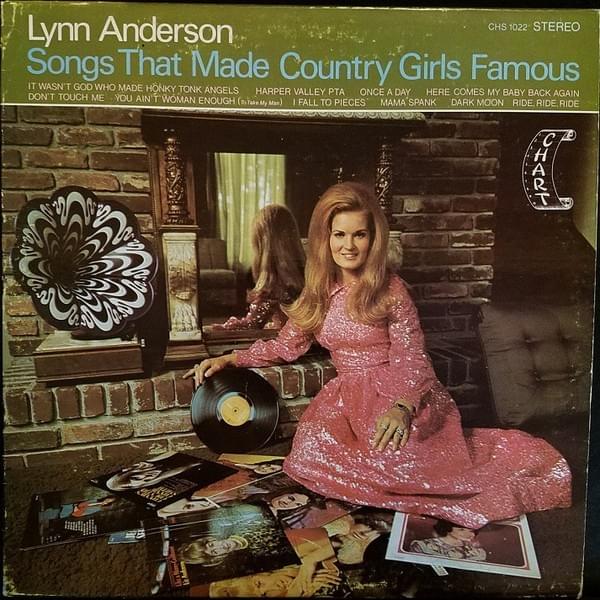
Lynn Anderson's defiant anthem, "You Ain't Woman Enough (To Take My Man)", is a masterclass in country music's articulation of female strength, drawing a line in the sand with a swagger that transcends simple jealousy. The song's enduring appeal lies not just in its catchy melody but in its unflinching confrontation of a romantic rival, exposing the insecurities and vulnerabilities that often simmer beneath the surface of such encounters. It's a fierce declaration of ownership, but also a subtle commentary on the societal pressures placed on women to maintain their relationships at all costs. Anderson's performance drips with a controlled rage, making it clear that this isn't just about a man; it's about a woman's self-worth being challenged.
The lyrics cleverly dissect the perceived threat posed by the other woman, reducing her to a mere commodity ("Women like you, they're a dime a dozen"). This isn't just a put-down; it's a strategic move to diminish the rival's power, suggesting she lacks the unique qualities necessary to truly capture her man's heart. The singer's confidence borders on arrogance, fueled by the belief that her connection with her partner is unbreakable. This stance, however, hints at a deeper anxiety: the fear that maybe, just maybe, the other woman *could* succeed. The repeated assertion, "You ain't woman enough to take my man," becomes a mantra, a way to ward off the creeping doubt.
Beneath the surface of this seemingly straightforward confrontation, "You Ain't Woman Enough" explores the complex dynamics of female competition and the lengths women feel compelled to go to in order to secure their positions in a patriarchal society. The line "Sometimes a man start lookin' at things that he don't need" reveals a cynical understanding of male desire, acknowledging the wandering eye while simultaneously placing the onus on the woman to keep her man in line. In essence, the song transforms a potential moment of weakness into a display of unwavering resolve, solidifying Lynn Anderson's place as a voice for women who refuse to be defined by the men in their lives. The song meaning resonates because it taps into the universal fear of being replaced, but reframes it as a battle to be won through sheer force of will.
 View Artist