Song Meaning
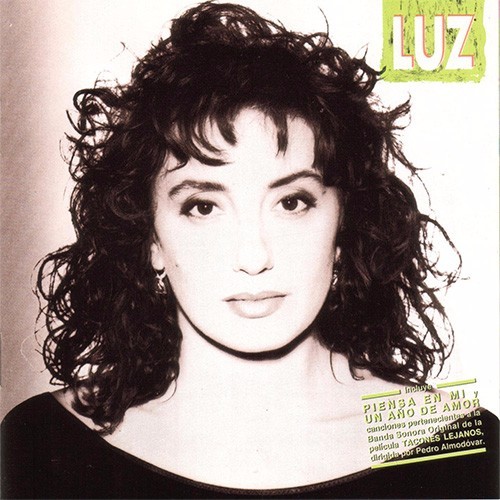
{"song_id": 12535368, "meaning": "Luz Casal's \"Square 1\" isn't a track about starting over in the traditional sense. It's a defiant, emotionally intelligent anthem about resilience and finding freedom within perceived limitations. The lyrics, sung in Spanish, paint a picture of life as a series of trails we leave behind, \"huellas que otros podrán seguir,\" hinting at legacy and the impact we have, even when fleeting. The recurring imagery of paths leading to Rome underscores the idea of predetermined routes, yet Casal cleverly subverts this with the line \"Más tarde es el destino / Quien pone a la 'I' otro punto de más,\" suggesting that fate itself is subject to subtle alterations, small acts of rebellion against a fixed course. This is less about wiping the slate clean and more about rewriting your own narrative within the existing framework. The phrase \"square 1\" is never explicitly stated, but the concept of going back to basics is heavily implied. The song meaning resides in the chorus’s repeated calls to action: \"Grita, si estás vencido / Salta, si ves el miedo / Canta, si hay un amigo / Que pueda ofrecer un pedazo de cielo.\" These aren't instructions for escaping hardship, but rather strategies for confronting it head-on, finding strength in vulnerability, and seeking solace in connection. The repeated calls to \"grita\" and \"salta\" also serve as a reminder to express one's emotions instead of holding them in.
The core of \"Square 1\" lies in its acceptance of life's inherent difficulties. Casal acknowledges the presence of suffering (\"Lo que nos hace sufrir\") and the inevitability of time running out (\"Cuando se agote el tiempo\"). However, she refuses to succumb to despair. Instead, she advocates for embracing the \"locura\" – the madness – that allows us to defy limitations. This isn't reckless abandon, but a conscious choice to engage with life on our own terms, even when faced with overwhelming odds. The line \"Aún puedes jugar con tu pasado\" is particularly poignant. It suggests that even our past, with all its baggage, can be a source of agency and creativity.
Ultimately, the song's power lies in its ability to find hope not in a clean slate, but in the messy, imperfect reality of existence. The shift in color (\"Y luego verás que cambia de color\") acts as a signal, a trigger to take a leap of faith (\"!lánzate ya!\"). \"Square 1\", in Casal’s world, isn't a place of defeat, but a launching pad for a renewed, albeit battle-scarred, self. It is about claiming control in a world that seems to offer little."}
 View Artist