Song Meaning
The lyrics paint a stark picture of regret and a desperate plea for a better future, articulated through a letter penned by Ernesto. The opening lines establish a somber mood, with Ernesto beginning to write "with smoke as a witness," suggesting a heavy, perhaps melancholic, atmosphere. He immediately addresses "Recordada Denisse," indicating a past connection, and expresses deep sadness over events from the "night before."
The core of the song lies in Ernesto's profound self-loathing and his desire to shield his potential offspring from his own perceived failings. He implores Denisse not to cry and to "have courage," but this encouragement is immediately overshadowed by a crushing demand: "For the greatest thing, I demand you not to give him my name, so that he won't be like me." This is a powerful indictment of his own character, a wish for his child to be entirely free from his inherited burdens.
The specific curses he wishes to spare his child are laid bare: "may he never taste liquor, may he never suffer a sorrow, and may he never fall in love with other people's women." These are not abstract wishes but concrete manifestations of his own destructive patterns, particularly the "rancor that runs in my veins." The repetition of "que nunca" (may he never) emphasizes the depth of his despair and the perceived "terrible sentence" he carries.
This lyrical construction is effective because it moves beyond simple apology to a profound act of self-negation for the sake of another. The raw honesty of his self-condemnation, particularly the fear that his son might inherit his "rancor" and his propensity for infidelity, creates a palpable sense of tragic weight. The letter format itself lends an air of intimacy and finality, making Ernesto's desperate hope for his child's unblemished future all the more poignant.
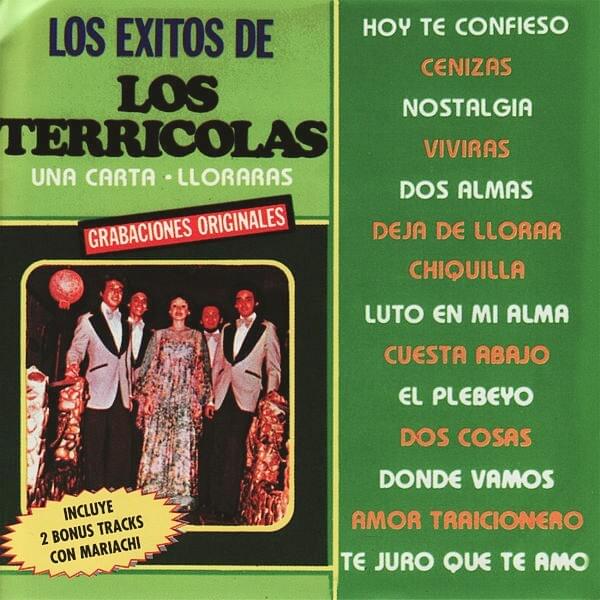
 View Artist