Song Meaning
{"song_id": 10498650, "meaning": "Lita Ford's \"Sacred\" isn't just another power ballad; it's a raw, almost desperate plea for connection and a testament to the consuming nature of profound love. While the lyrics initially flirt with Hallmark-esque sentimentality (\"Til death do us part/But the Hallmark cards say all that stuff\"), they quickly transcend cliché, plunging into a realm of devotion that borders on the spiritual. The repeated declaration, \"You're so sacred to me,\" moves beyond simple affection. The song meaning here positions the object of her affection as something akin to a deity, an irreplaceable cornerstone of her existence. Ford isn't just expressing love; she's articulating a sense of reverence. This isn't just about romance; it's about finding something holy in another person.
The lyrical simplicity is deceptive. Ford readily admits the inadequacy of language itself, stating, \"There's not a big enough word/To tell you how I feel,\" and resorting to song as a more potent form of communication. This resonates with the listener on a primal level. It acknowledges that some emotions are simply too vast, too complex, to be contained within the confines of ordinary vocabulary. The commitment to \"spend eternity loving you faithfully\" speaks to a desire for permanence, a yearning to escape the fleeting nature of human experience. It's a rejection of the ephemeral, a staking of claim on forever.
Ultimately, \"Sacred\" teeters on the edge of obsession, blurring the lines between devotion and idolatry. Phrases like \"You're the answer to me prayers/My every fantasy/My soul is yours eternally\" suggest a complete surrender of self. This isn't necessarily unhealthy, but it highlights the inherent vulnerability in such profound emotional investment. The willingness to \"die for you\" isn't presented as a heroic gesture, but rather as a natural consequence of the beloved's sacred status. Lita Ford, in \"Sacred,\" offers a glimpse into the intoxicating and potentially dangerous power of unconditional love, where the object of affection becomes not just a partner, but a reason for being."}
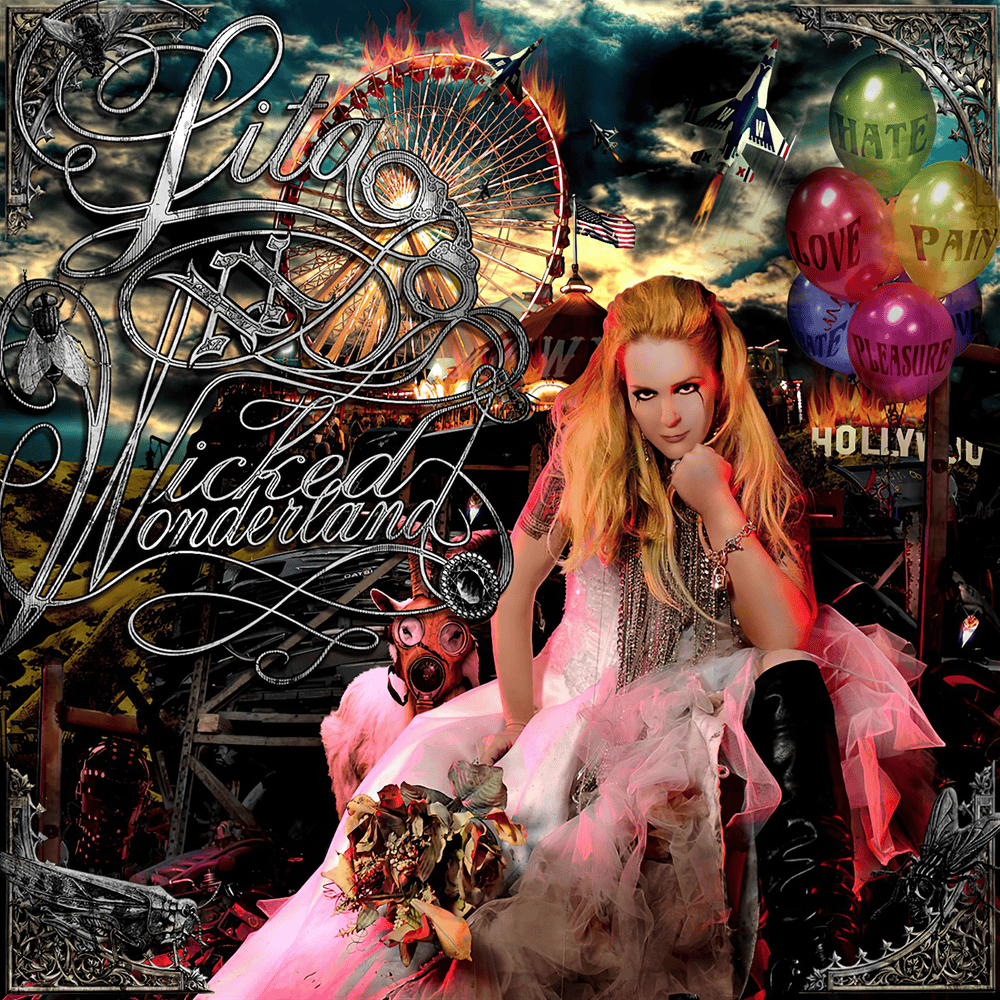
 View Artist