Song Meaning
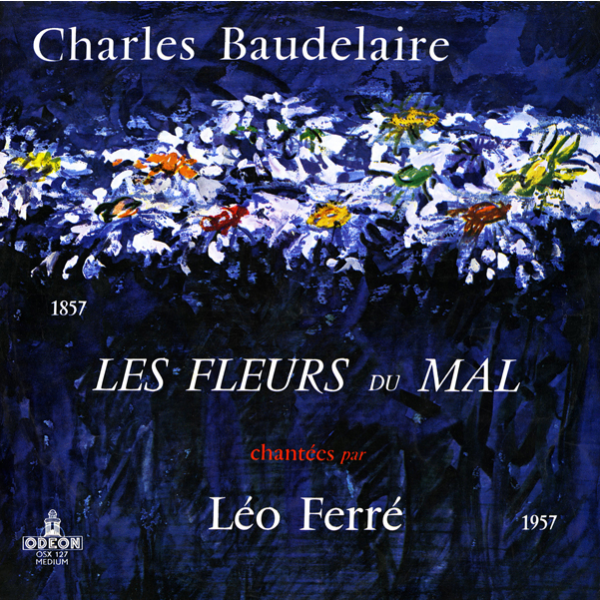
Léo Ferré's "La mort des amants" isn't a dirge, but a darkly romantic proposition. The song, steeped in fin-de-siècle symbolism, envisions death not as an end, but as the ultimate consummation of love. Ferré, channeling Baudelaire, paints a lavishly morbid scene: beds saturated with delicate scents, divans as deep as tombs. These are not images of decay, but of a carefully constructed, sensual afterlife. The 'strange flowers' blooming under 'beautiful skies' suggest a paradise born of their unique, shared passion, a world inaccessible to the living. The lyrics function as both intimate invitation and philosophical statement.
The core of "La mort des amants" resides in the metaphor of hearts as 'vast torches.' This reflects a shared energy, an intense bond that transcends the physical. The torches cast light onto 'twin mirrors' representing their minds, emphasizing the profound connection and mutual understanding between the lovers. This mirroring suggests a complete merging of identities, a unified consciousness prepared to face eternity together. The 'rose and mystic blue evening' signals a moment of transcendent exchange. This 'unique flash,' a 'long sob, full of farewells,' marks the transition from earthly existence to something beyond, a final, shared experience before the unknown.
Ultimately, Ferré offers a vision of hope within the darkness. The arrival of an angel is not a somber event, but a joyous one. The angel's role is to rekindle the 'tarnished mirrors and dead flames,' reviving their love in a new, eternal form. The song proposes that true love defies even death, finding renewal and perpetuation in a realm beyond our comprehension. It's a testament to the enduring power of connection, a belief that the most profound bonds are not broken by mortality, but transformed into something eternally luminous.
 View Artist