Song Meaning
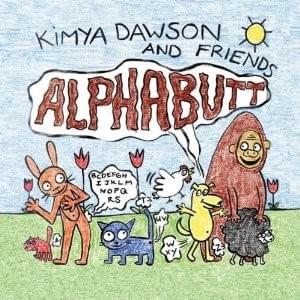
Kimya Dawson's "Alphabutt" isn't just a children's alphabet song; it's a subversive exercise in deconstructing the very concept of ordered learning. While ostensibly teaching the ABCs, Dawson gleefully undermines educational norms by prioritizing the scatological and the absurd. The song's persistent return to "butt," "doo doo," and "fart" acts as a primal, almost Freudian, rebellion against the imposed structure of language and societal expectations. It's the id crashing the classroom. By juxtaposing the innocent (apples, jammies) with the grotesque (gorilla farts, zoo-smelling farts), Dawson creates a comedic tension that resonates with both children's delight in the forbidden and adults' knowing appreciation of the ridiculous.
The brilliance of "Alphabutt" lies in its understanding of the child's psyche. Young minds are naturally drawn to the silly, the messy, and the slightly taboo. Dawson taps into this inherent inclination, using humor as a Trojan horse to deliver a more profound message: learning can be fun, irreverent, and even a little bit gross. The non-sequiturs, like "Q is for Q-Bert" and "R is for robotic monkey who's going to take over the world," further disrupt the expected linear progression, suggesting that knowledge acquisition isn't always a straight line but a playful, meandering journey.
Ultimately, “Alphabutt,” rather than being simple childish fare, uses scatological humor to expose the often-arbitrary nature of language and education. It pokes fun at the seriousness with which we often approach learning, reminding us that embracing the absurd can be just as valuable as mastering the alphabet. The sing-song delivery and nonsensical imagery create a space where children (and adults) can laugh, learn, and maybe even let out a little inner "gorilla fart" of their own.
 View Artist