Song Meaning
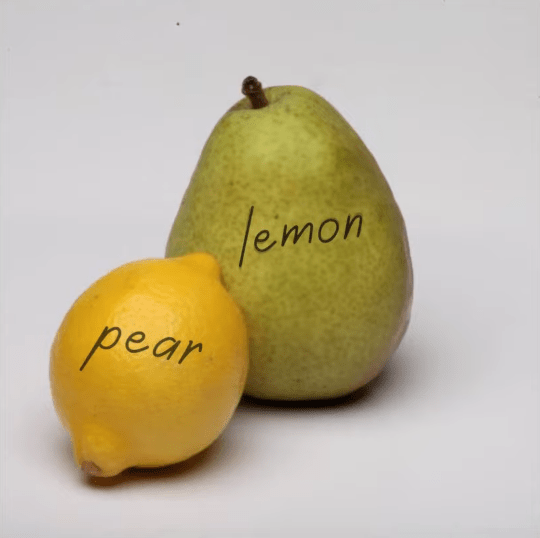
The lyrics paint a surreal, internal dialogue where the narrator grapples with a persistent, unwelcome thought personified as "Lemon." This "Lemon" claims to be "confined," unable to leave the narrator's mind, creating an immediate tension between the narrator's desire for release and the thought's perceived inability to comply. The plea to "pretend it's Christmas Eve" suggests a desperate attempt to invoke a temporary peace or a sense of shared goodwill, highlighting the narrator's frustration with this mental "stuckness."
The core conflict emerges as the narrator pleads with "Lemon" to "remember how to go," implying a past state where this thought was not so entrenched. However, "Lemon" deflects, suggesting the narrator should "tell this to your diary" and revealing a new fixation: "Pear." This introduces a bizarre, almost absurd element, as "Lemon" has seemingly moved on to a new, more desirable thought, leaving the narrator still trapped with the old one. The "multi-pear-llionaire" line is a particularly sharp, pun-laden jab, emphasizing Pear's perceived superiority and "Lemon's" own perceived lack of value.
The repeated, escalating negations – "impossible," "infeasible," "improbable," "im-grapes-able," and finally "impeachable" – underscore the narrator's growing despair and the perceived impossibility of escaping the intrusive thought. The wordplay here is key; the shift from "grapes" to "impeachable" suggests a move from a fruity, internal struggle to a more serious, perhaps even legally or morally damning, consequence of being unable to let go. The narrator's imagined future retaliation, wishing "Lemon" a "rotten day," is met with a fantastical reconciliation where "Lemon" apologizes and they "always have your song," a hollow victory that doesn't resolve the underlying issue.
Ultimately, the lyrics effectively capture the frustrating, cyclical nature of intrusive thoughts or persistent anxieties. The personification of "Lemon" and "Pear" creates a vivid, if strange, internal landscape. The clever, often silly wordplay, especially in the "forember" and the series of negations, belies a deep sense of helplessness and the feeling that one's own mind can become an inescapable, illogical prison.
 View Artist