Song Meaning
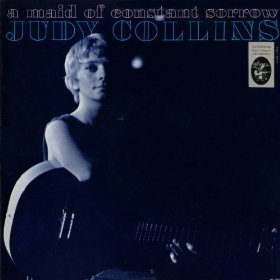
Judy Collins' rendition of "I Know Where I'm Going" isn't just a folk song; it's a psychological portrait of desire wrestling with destiny. The opening lines, repeated as a refrain, establish a confident declaration of self-knowledge: 'I know where I'm going, I know who's going with me, I know who I love.' But this certainty immediately cracks with the line, 'And the devil knows who I'll marry.' This isn't just playful fatalism; it's the subconscious admitting a lack of control. The 'devil' represents forces beyond conscious will – societal expectations, perhaps, or the allure of the forbidden. The song's core tension lies in this battle between what the singer consciously desires ('handsome winsome Johnny') and what she fears is preordained.
The verses detailing material possessions – 'stockings of silk, shoes of bright green leather' – are not simple boasts of wealth. Instead, they symbolize a societal pressure, an expectation of marrying for status rather than love. These objects, while beautiful, are ultimately hollow substitutes for genuine connection. The singer explicitly acknowledges this, stating she would 'trade them all' for her 'handsome winsome Johnny.' This is a crucial assertion of agency, a rebellion against the gilded cage that society offers. The repetition of Johnny's attractiveness ('Some say he's bad, I say he's bonny') suggests a defiance of social judgment, a prioritization of personal passion over public opinion.
Ultimately, the song's meaning hinges on the unresolved tension between desire and destiny. The final repetition of the opening verse, with its devilish premonition, leaves the listener with a sense of unease. Has the singer truly broken free from societal expectations, or is she merely deluding herself? Is 'handsome winsome Johnny' a genuine love or a reckless infatuation that will lead to ruin? The ambiguity is the point. "I Know Where I'm Going", as interpreted by Judy Collins, is a timeless exploration of the human heart's conflicting desires and the eternal struggle to reconcile personal will with the perceived hand of fate. The lyrics analysis reveals a complex narrative of love, rebellion, and the haunting possibility of a predetermined future.
 View Artist