Song Meaning
The lyrics personify hair, giving it agency and a capacity for feeling. The opening chant, "Cabelo, cabeleira / Cabeluda, descabela," immediately establishes hair not as a passive attribute but as a vibrant, almost wild entity that can become unruly. This sets a playful yet profound tone, challenging the notion that hair is merely inert matter.
The central tension arises from contrasting how hair is perceived versus its perceived inner life. The narrator directly questions, "Quem disse que cabelo / Não sente" (Who said hair / Doesn't feel) and "Não gosta de pente" (Doesn't like a comb). This anthropomorphism extends to equating hair growth with time, tangled hair with wind, and its origin with an internal source, likening it to thought. The lyrics push back against dismissing hair as insignificant, "mato" (bush) or "pasto" (pasture), instead celebrating its pride as a "crina" (mane).
The most striking craft element is the consistent use of metaphor and analogy to imbue hair with life and personality. "Cabelo quando cresce é tempo" (Hair when it grows is time) is a powerful image connecting physical growth to the passage of life. Similarly, "Cabelo embaraçado é vento" (Tangled hair is wind) evokes a sense of natural, untamed force. The lyrics also explore the transformative potential of hair, listing various styles and treatments – cut, long, braided, dyed, trimmed, brushed, bleached, or styled – suggesting that while hair can be manipulated, its essence remains.
This lyrical approach is effective because it elevates a common physical characteristic into something deeply personal and expressive. By attributing feelings and symbolic weight to hair, the lyrics invite listeners to reconsider their own relationship with their appearance and identity. The playful yet assertive language creates an empowering narrative, celebrating hair as a source of pride and a reflection of inner states, much like a lion's mane or Samson's strength.
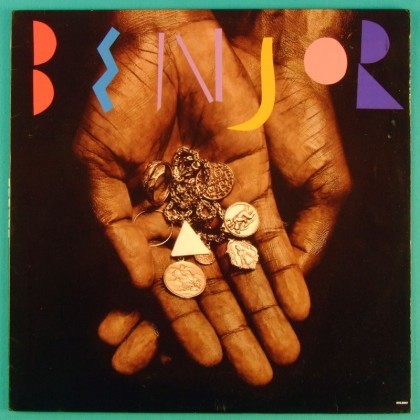
 View Artist