Song Meaning
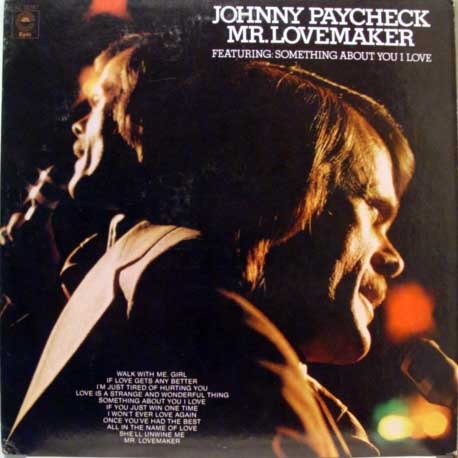
Johnny Paycheck's "I Won't Ever Love Again" isn't just a country ballad; it's a raw nerve exposed, a primal scream of codependency masquerading as devotion. Forget the surface-level reading of undying love. Dig deeper, and you'll find an almost terrifying vulnerability, a complete annihilation of self in the face of potential loss. The lyrics aren't about cherishing a partner; they're about a desperate clinging, a declared inability to function as an individual. The repeated vow, "I won't ever love again," becomes less a romantic promise and more a haunting admission of emotional fragility. It's the kind of statement born from a place of profound insecurity, where the speaker's entire identity is wrapped up in the relationship.
Paycheck's delivery, with its characteristic twang and world-weariness, only amplifies the underlying desperation. The lines about laying down his life and deserting his closest friend aren't acts of noble sacrifice; they're evidence of a skewed emotional landscape where personal boundaries have dissolved. He's willing to erase himself for this love, suggesting a deep-seated fear of abandonment and a belief that he's somehow unworthy of love on his own. The phrase "safely in my hands" when referring to the partner's heart hints at a controlling aspect, as if love is something to be guarded and possessed rather than freely given and received.
Ultimately, "I Won't Ever Love Again" is a cautionary tale disguised as a love song. It's a stark portrayal of the dangers of losing oneself in another person, of building an identity so fragile that its collapse is inevitable should the relationship end. The "one time" love the lyrics refer to feels like a self-fulfilling prophecy, a belief system designed to perpetuate dependency and prevent future healing. It's a testament to Paycheck's artistry that he could imbue such a seemingly simple song with such a complex and unsettling psychological subtext.
 View Artist