Song Meaning
João Donato's "Cala Boca Menino" initially presents itself as a simple children's rhyme, a lullaby laced with playful repetition ("nhém, nhém, nhém"). However, beneath the surface of this seemingly innocent tune lies a subtle commentary on power dynamics and perhaps even a veiled critique of patriarchal structures. The command, "Cala boca menino" (Shut your mouth, boy), immediately establishes a hierarchy. The boy is silenced, his voice suppressed by the implied authority of the father figure. This isn't merely a request for quiet; it's an assertion of control.
The father's absence, framed as a quest "pro cabula" to fetch "jaca mole" (soft jackfruit) from "cabeça dura" (hard head), introduces a layer of absurdity and potential symbolism. The "cabula" could be a metaphor for a distant, perhaps even mythical, place where resources are scarce or difficult to obtain. The "jaca mole" itself, a soft and yielding fruit, might represent a desired outcome or a weakness sought from the "cabeça dura" – a stubborn or unyielding individual. Is the father's quest a necessary provision, or is it a thinly veiled excuse for his absence, leaving the boy vulnerable and silenced?
Ultimately, the song's meaning resides in its ambiguity. Is it a harmless nursery rhyme meant to soothe a child, or a subtly subversive commentary on authority and the expectations placed upon young boys? Donato's genius lies in his ability to blend the mundane with the metaphorical, leaving the listener to grapple with the underlying tensions within this seemingly simple Brazilian tune. The repetition, far from being merely childish, reinforces the cyclical nature of these power dynamics, suggesting that the silencing of the boy is not an isolated incident, but an ongoing pattern.
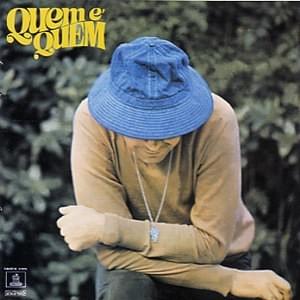
 View Artist