Song Meaning
{"song_id": 14484036, "meaning": "Joan Baez's rendition of \"Hush Little Baby\" isn't just a lullaby; it's a subtly unsettling exploration of conditional love and the precariousness of material comfort. On the surface, the song offers a string of increasingly absurd promises, each contingent on the failure of the last. A silent mockingbird leads to a diamond ring, which leads to a looking glass, and so on. This escalating series of 'gifts' reveals a deeper anxiety: the fear that affection must be constantly earned and validated through external possessions. The promise of love becomes intertwined with a cycle of acquisition and disappointment. Is the baby meant to feel loved, or burdened by the expectation to perform (or, in the case of the animals, *perform* their natural functions) to deserve the next gift? This \"Hush Little Baby\" lyrics analysis points to the anxiety of raising a child in a culture that constantly equates material items with affection.
The psychological undercurrent of the song lies in the parent's (or caregiver's) own insecurity. The repeated \"And if that...\" clauses betray a fear of inadequacy. Each gift is a potential failure, a reflection of the parent's inability to provide lasting happiness. The mother figure in \"Hush Little Baby\" seems to be attempting to soothe her own anxieties as much as the child's, using material objects as a shield against the uncertainties of parenthood. Baez's interpretation, with its stark simplicity, amplifies this sense of unease. The song becomes less about comforting the child and more about the parent's desperate attempt to control an unpredictable world.
Ultimately, the final line offers a glimmer of hope, a break in the cycle of conditional affection. \"You'll still be the sweetest little baby in town\" suggests unconditional love, a recognition that the child's worth transcends material possessions or the performance of tricks. But even this sentiment is tinged with ambiguity. Is it a genuine expression of unconditional love, or a last-ditch attempt to reassure both the child and the parent in the face of inevitable disappointment? The power of Joan Baez's version of \"Hush Little Baby\" lies in its refusal to offer easy answers, leaving the listener to ponder the complex dynamics of love, security, and the human need for validation."}
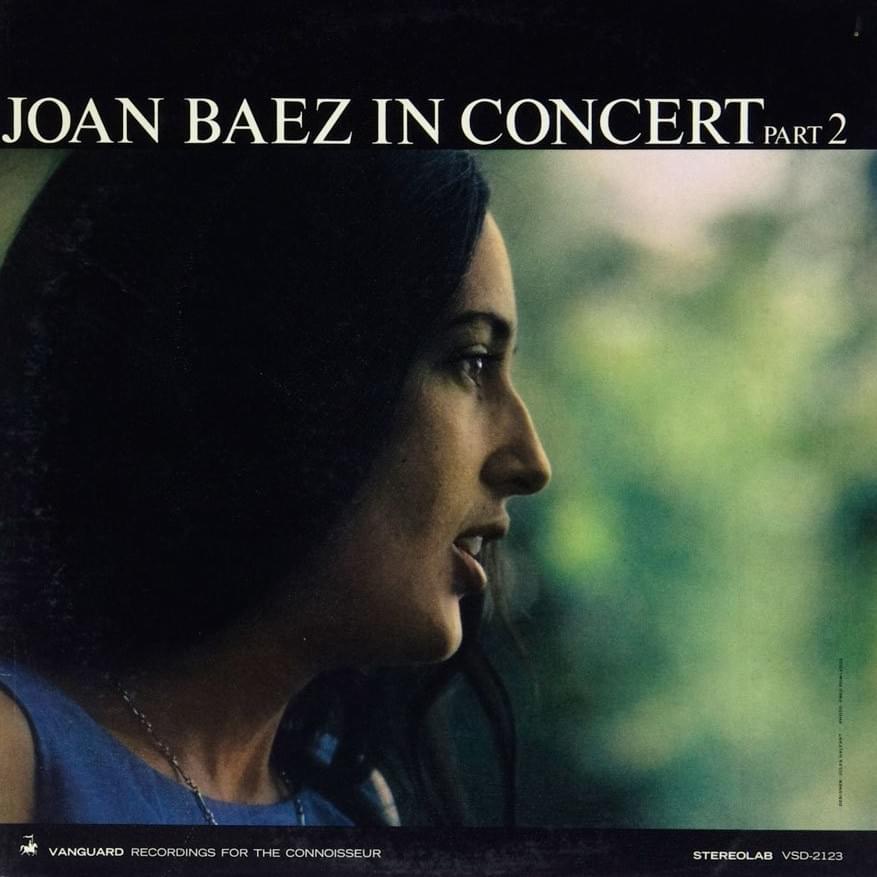
 View Artist