Song Meaning
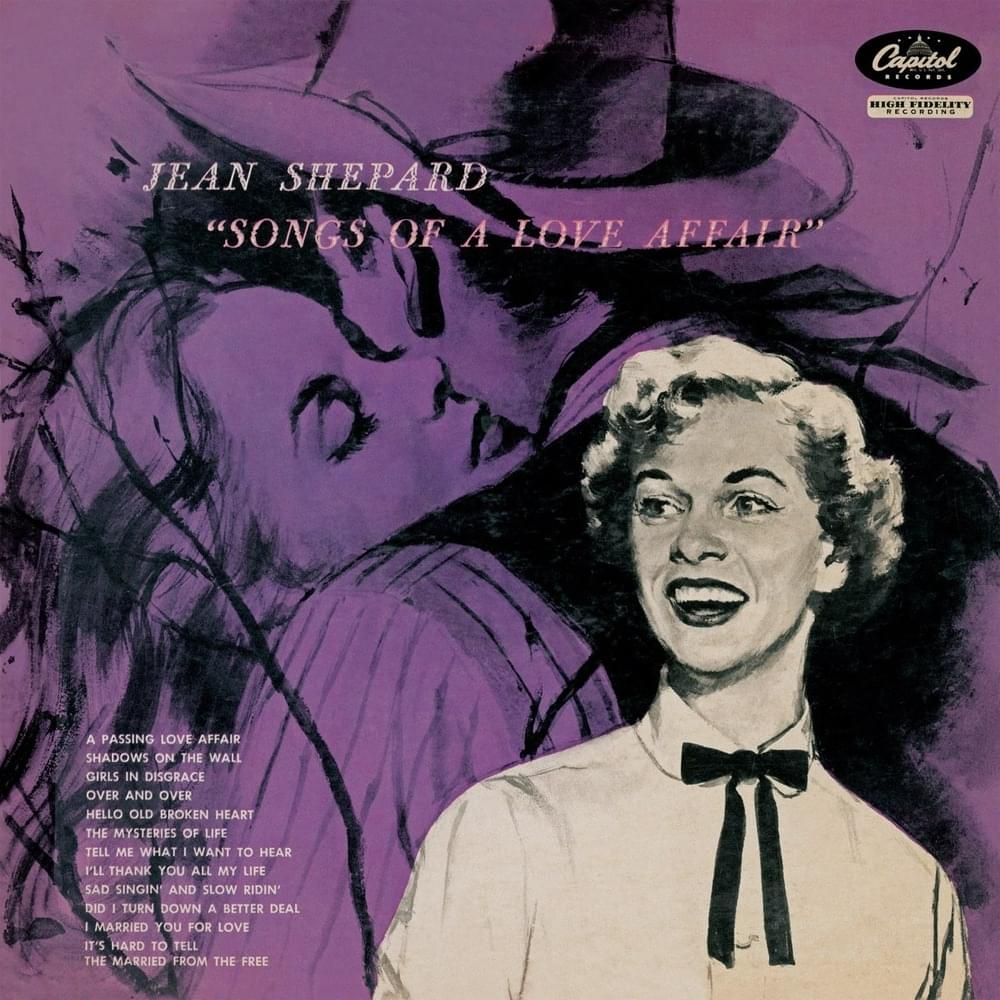
Jean Shepard cuts to the quick of marital anxiety with "It's Hard to Tell the Married From the Free," a song that's less about judging individual behavior and more about diagnosing a widespread cultural malaise. The track doesn't waste time moralizing; instead, it observes the unsettling reality of infidelity's creeping normalcy. The missing wedding band becomes a loaded symbol – its absence not necessarily indicating freedom, but instead masking potential heartbreak and deception. Shepard isn't just singing about straying spouses; she's pointing to the erosion of trust within the very institution of marriage. The 'past time' alibi, the late-night excuses – they're all flimsy covers for a deeper disconnect. The song's power resides in its quiet resignation, a sense that this ambiguity is not an exception, but a pervasive rule.
The song's genius is in its framing. Rather than explicitly condemning the wandering men, Shepard focuses on the women left behind, the "someone" who "hopes each time will be the last time." This subtle shift in perspective transforms the song from a simple cautionary tale into a poignant exploration of vulnerability and the quiet desperation of maintaining faith in a relationship. The 'party' scenario becomes a microcosm of this societal uncertainty. The ambiguity of attraction, the difficulty in discerning genuine availability from concealed commitment – it all adds up to a world where appearances are deceiving and the emotional stakes are dangerously high.
Ultimately, "It's Hard to Tell the Married From the Free" isn't just a commentary on infidelity; it's a reflection on the performance of identity and the anxieties of modern relationships. It's about the subtle signals we send (or fail to send) and the constant undercurrent of doubt that simmers beneath the surface of even the most seemingly stable unions. The song's enduring appeal lies in its unflinching honesty and its refusal to offer easy answers to a complex and painful reality.
 View Artist