Song Meaning
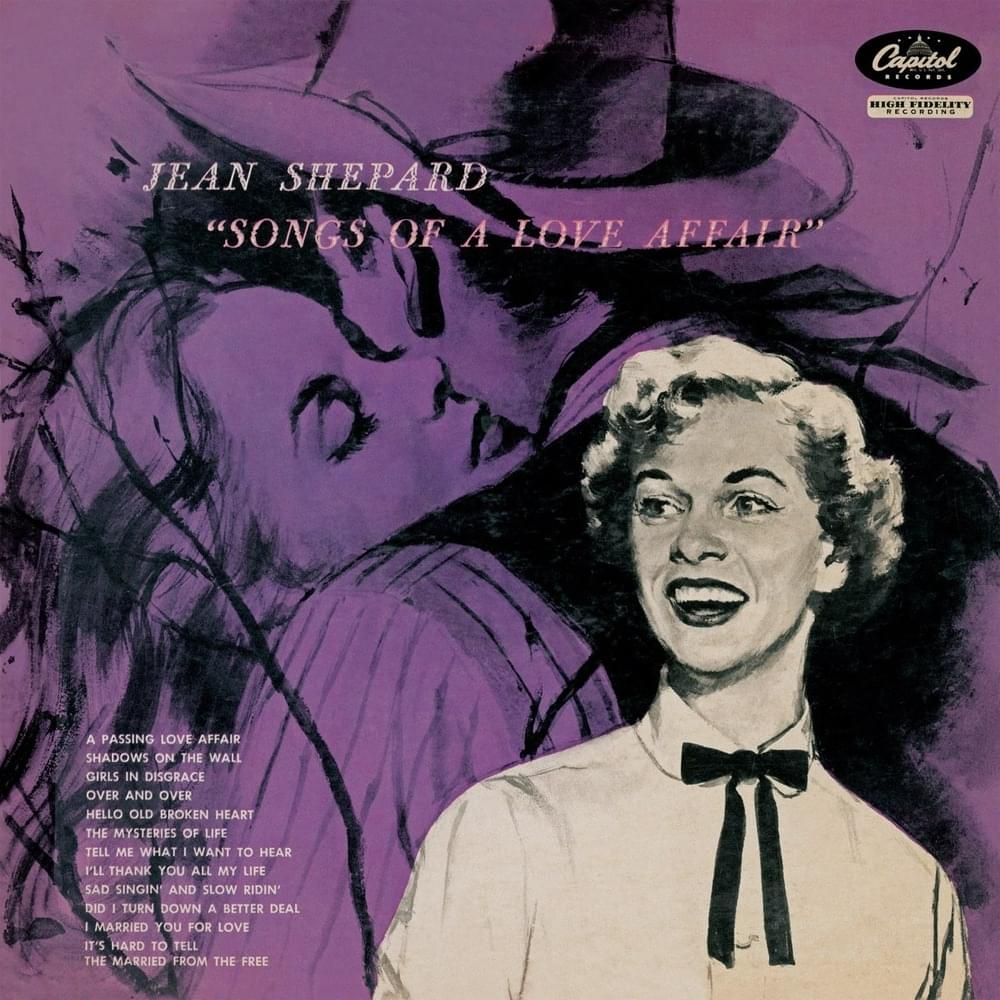
Jean Shepard's "I Married You for Love" isn't just a country ballad; it's a defiant manifesto against the gilded cage of transactional relationships. In a world obsessed with upward mobility and material gain, Shepard plants her flag firmly in the territory of genuine affection. The opening lines immediately establish this contrast, as she acknowledges her lack of material wealth ("not a penny could I pay") while simultaneously declaring herself "the lucky one." This juxtaposition isn't accidental; it's the thesis statement of the entire song. The value system here is inverted: love is the true currency, the real riches. The simple act of exchanging rings becomes a sacred pact blessed by nature itself.
Shepard doubles down on this sentiment, making it clear that even the most extravagant displays of wealth are meaningless without the presence of her beloved. "A mansion on a hilltop wouldn't mean a thing to me / I'd never step inside it dear if you're not there with me." The imagery is potent: a grand, empty house symbolizes the hollowness of a life lived for status rather than connection. The repetition of "I married you for love" isn't just a refrain; it's a repeated vow, a constant reaffirmation of her priorities. It's a message to anyone who might question her choices, to those who prioritize security over passion.
Ultimately, "I Married You for Love" transcends the typical romantic narrative. It's a subtle critique of societal values, a reminder that true wealth lies not in possessions but in the bonds we forge. The song champions emotional intimacy as the ultimate form of security, suggesting that a shared heart is a far more valuable asset than any bank account. In Shepard's world, love isn't just a feeling; it's a conscious decision, a rebellion against the superficiality of modern life.
 View Artist