Song Meaning
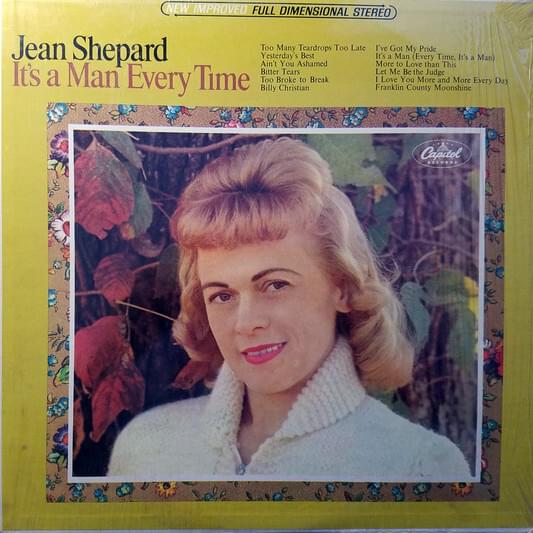
Jean Shepard's lament, "It's a Man (Every Time It's a Man)," isn't just a country tune; it's a sharply observed indictment of societal double standards, delivered with the weary resignation of someone who's seen it all. The song's power lies in its stark simplicity, repeatedly hammering home the idea that men are consistently absolved of the pain they inflict, while women bear the brunt of both their actions and the resulting shame. It's a bitter pill of patriarchal reality served up in under three minutes. Shepard isn't just singing about heartbreak; she’s dissecting the mechanics of a system rigged against women. The casual destruction of love – "who breaks a heart like a child breaks a toy?" – is laid squarely at the feet of men, but the deeper cut comes from the unequal distribution of consequences.
The brilliance of the lyrics analysis resides in its understanding of institutionalized sexism. It's not merely a personal grievance; it's a commentary on how the world operates. When a man errs, the world grants forgiveness, while a woman's mistakes become lifelong burdens. This isn't just about romantic relationships; it speaks to a broader cultural narrative where men are afforded leniency and women are held to impossibly high standards. The cyclical nature of the lyrics, with the repeated refrain, reinforces the feeling of inevitability and the seemingly unbreakable pattern of male privilege and female suffering. The song meaning transcends a simple tale of woe.
Ultimately, "It's a Man (Every Time It's a Man)" is a masterclass in understated rage. Shepard doesn't need histrionics; the quiet, almost matter-of-fact delivery amplifies the song's devastating message. It's a cold, hard truth wrapped in a country melody, a reminder that even within the confines of genre, powerful social commentary can take root and resonate across generations. The song's enduring appeal lies in its unflinching honesty and its willingness to call out the pervasive inequalities that continue to shape our world. It's a timeless lament, as relevant today as it was when it was first released.
 View Artist