Song Meaning
The lyrics paint a picture of someone feeling trapped and overwhelmed by the mundane, questioning their place within it. The opening lines, with a "low frequency" from an answering machine and a plea of "Where should I go?", immediately establish a sense of disorientation and a desire to escape the "front line of everyday life." This feeling is amplified by the narrator's internal struggle, wanting to "spit out all the jokes I've stored up" and acknowledging that "everything is changing." The scene shifts to a "sooty four-tatami room," a cramped and perhaps neglected space, where the narrator feels judged by their own desire to flee, wondering if they'll be "laughed at" for escaping the everyday.
The core tension lies in the narrator's conflict between a yearning for escape and the paralyzing realization of their current limitations. They are caught in a cycle of seeking "cut-out right answers" and repeating "the same old thing," leading to a profound sense of stagnation. The desire to "just sink innocently far away" is met with the admission, "But I don't know the answer." This internal paralysis is underscored by the imagery of a "pointlessly beautiful room," suggesting an external facade that doesn't match the internal turmoil.
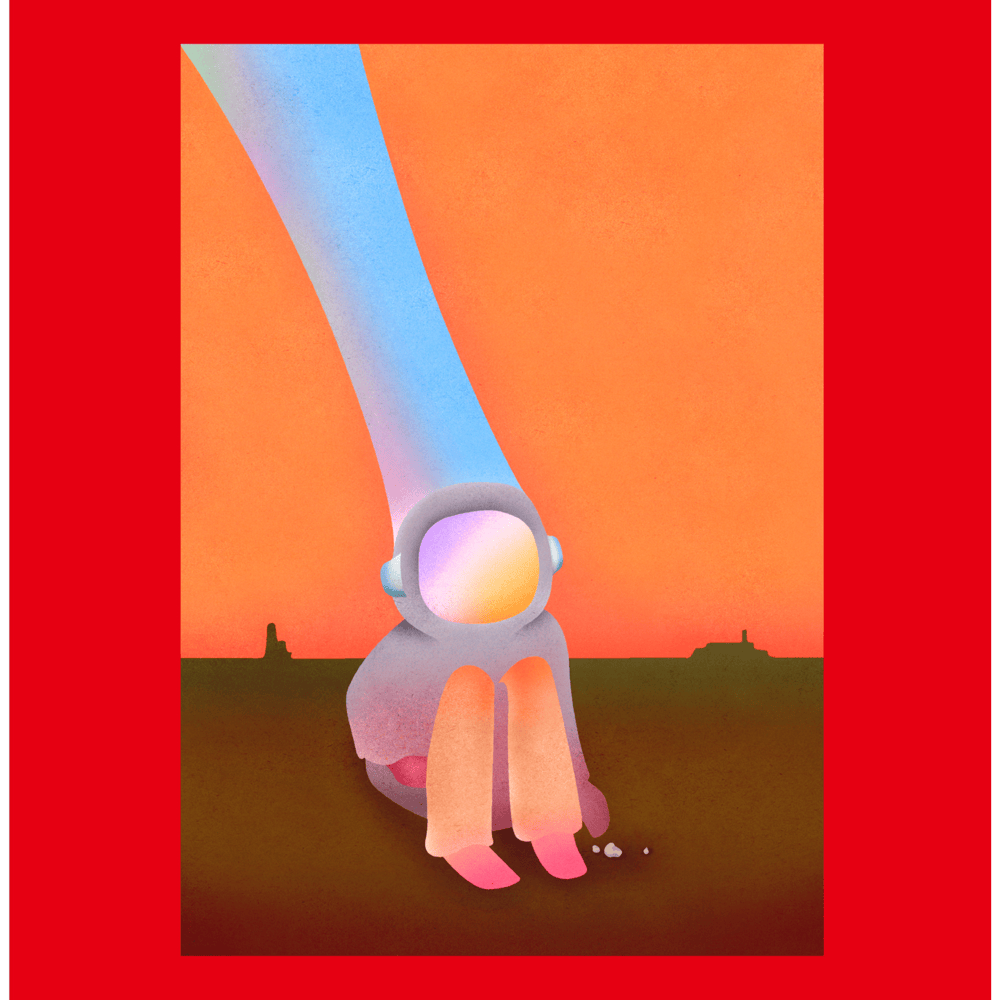
The lyrics masterfully employ the motif of "takai takai" (a Japanese children's game, often translated as "up, up, high") to create a complex emotional landscape. Initially, it seems like a playful, perhaps even desperate, invitation to be lifted away from the current reality, asking "How about up, up high?" However, this is juxtaposed with the crushing realization that "There's no escape route" and "we're just on a sphere." The repeated question, "How about up, up high?" transforms from a hopeful plea to a taunting, almost mocking, question, especially when paired with the coldness of everyday life and the narrator's repeated failures.
Ultimately, the effectiveness of these lyrics stems from their raw portrayal of existential ennui and the struggle against a perceived lack of agency. The narrator's repeated "failures" and the feeling of being stuck in "simple repetitive tasks" resonate with a deep-seated anxiety about progress and purpose. The repeated, almost desperate, invitation to "come on" with the "takai takai" becomes a poignant expression of a desire for connection or release, even as the narrator acknowledges the futility and sadness of their situation, making the listener feel the weight of their internal struggle.
 View Artist