Song Meaning
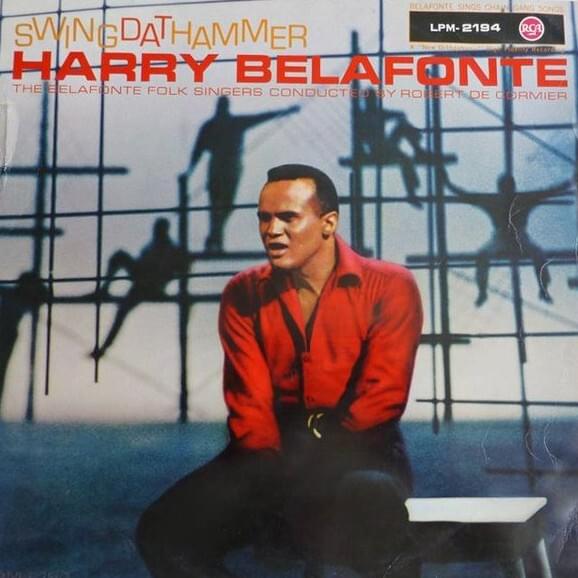
{"song_id": 11835630, "meaning": "Harry Belafonte's rendition of \"Go Down Old Hannah\" isn't just a folk song; it's a blistering spiritual forged in the crucible of forced labor. The lyrics paint a stark picture of men toiling under a merciless sun, personified as \"ol' Hannah,\" whose \"flamin' red\" hair evokes both the sun's intensity and a sense of impending doom. This isn't just about physical discomfort; it's about a psychological breaking point. The plea, \"Why don't you go down, ol' Hannah, don't you rise no more,\" is a desperate yearning for respite, not just from the heat, but from the entire oppressive system.
The song's emotional core lies in the lines referencing Julie. In a moment of near-death exhaustion (\"He was almost dead\"), the narrator's thoughts turn to a loved one. This isn't a grand declaration of love, but a simple, heartbreaking request: \"Tell her I won't be long.\" It speaks volumes about the conditions these men endured, where even a goodbye seems uncertain. The narrator's insistence that he \"was a good man, but they drove me down\" hints at injustice and the crushing weight of societal forces. It's a lament for lost dignity and a life unjustly stolen.
Ultimately, \"Go Down Old Hannah\" transcends its simple structure to become a profound statement on human resilience in the face of dehumanization. The repetitive phrasing and mournful melody underscore the cyclical nature of their suffering. Each verse builds upon the previous, amplifying the sense of hopelessness and the longing for release. The final lines, \"it looks like ev'rything I do is wrong,\" encapsulate the psychological toll of systemic oppression, where even the most basic acts are perceived as failures under the watchful eye of \"ol' Hannah\" and the system she represents. Belafonte's interpretation imbues the song with a palpable sense of empathy, transforming it from a work song into a powerful indictment of exploitation."}
 View Artist