Song Meaning
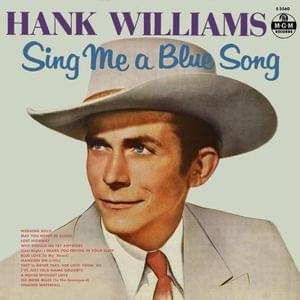
{"song_id": 10910639, "meaning": "Hank Williams' \"Otamfo\" (likely a misspelling, or perhaps a regional variation, of 'Otanaha') is less a song than a primal scream distilled into country simplicity. It’s the blues, pure and unvarnished, laid bare in the lyrical repetition. The insistent return to the phrase \"blue love in my heart\" isn't just a hook; it's a mantra, a desperate attempt to self-soothe in the face of overwhelming emotional pain. The color blue, of course, has long been associated with melancholy, but here it's not merely sadness; it's a profound, almost existential loneliness. This \"blue love\" permeates everything, coloring the singer's entire world. The simplicity of the language belies the depth of the feeling. It's the sound of a man stripped down to his emotional core.
The lyrics themselves offer scant narrative detail, which in some ways intensifies the song's impact. We don’t know who the object of this \"blue love\" is, or why they're apart. All that matters is the present, the gnawing ache of absence. The lines, \"So blue the nights, so blue the days / Why don't you write to me and say; / You've got a true love in your heart / And stop this burnin', yearnin' while we're apart,\" articulate a yearning that is both passive and accusatory. The singer is pleading for reassurance, for some sign that his love is reciprocated, but there's also an undercurrent of resentment. He's trapped in this cycle of \"burnin', yearnin',\" and he needs the other person to break it.
The image of the \"weepin'-willow\" further reinforces the theme of passive suffering. The weeping willow is a symbol of mourning, of grief that is both beautiful and tragic. The singer is not actively fighting for his love; he's simply withering away, consumed by his own sadness. The \"old flame\" in his heart, now seemingly reduced to embers, suggests a love that was once passionate and vibrant but is now fading into memory, leaving behind only the blue residue of regret. The song's power lies not in its complexity, but in its raw, unfiltered emotion – a stark portrait of heartache that transcends time and genre. This Hank Williams track is a masterclass in emotional economy, proving that sometimes, the simplest words can convey the most profound pain. The question \"What can i do, where can i go / I never knew i loved you so,\" is less a question, but more of a mournful acceptance of the singer's fate."}
 View Artist