Song Meaning
Gilberto Gil's "Ending" presents a deceptively simple tableau, a series of observations that coalesce into a meditation on perception and societal dissonance. The opening lines, a directive to look skyward and then groundward, immediately establish a framework of mindful awareness. This isn't passive observation; it's an active engagement with the immediate environment, a call to notice the mundane details often overlooked. The "luz que vem lá do caminhão" (light from the truck) introduces an element of the everyday intruding upon the potentially sublime, a disruption of any romanticized notion of nature. It suggests a world where the industrial and the natural are inextricably linked, a characteristic tension in Gil's broader discography. This blending of the organic and the manufactured can be seen as a direct reflection of the cultural landscape Gil inhabited, where traditional Brazilian identity was constantly negotiating with globalizing forces.
The subsequent lines referencing the Rolling Stones inject a further layer of complexity. The repetition of "Rolling's tão tocando bem / Rolling's tão tocando mal / Rolling's tão tocando mil / Na boca do pessoal" (Rolling's playing so well / Rolling's playing so badly / Rolling's playing a thousand / In the mouth of the people) highlights the subjective and often contradictory nature of popular opinion. The iconic British rock band becomes a symbol, not just of music, but of cultural influence and the ever-shifting tides of taste. The phrase "na boca do pessoal" emphasizes the communal aspect of this phenomenon; the Rolling Stones' music, and by extension, cultural trends in general, are chewed over and disseminated through the collective consciousness.
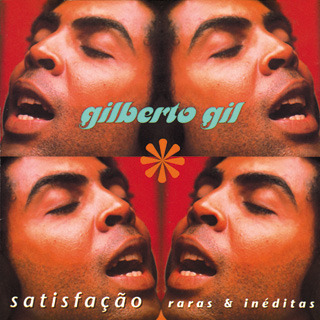
The concluding lines, "Posso ter não satisfação / Posso ter não satisfação" (I may have no satisfaction / I may have no satisfaction), offer a poignant resolution to the song's understated exploration. This isn't necessarily a declaration of unhappiness, but rather an acknowledgement of the inherent limitations of satisfaction itself. It echoes the Rolling Stones' famous anthem, yet it inverts the sentiment. Gil doesn't demand satisfaction; he anticipates its potential absence. In this context, "Ending," becomes not just a title, but a quiet acceptance of impermanence and the cyclical nature of experience. The song meaning, therefore, revolves around observation, cultural commentary, and the acceptance of life's inherent contradictions.
 View Artist