Song Meaning
Gene Watson's "One and One and One" isn't just a country lament; it's a masterclass in the mathematics of heartbreak. The song meaning revolves around a classic, yet devastating, scenario: infidelity. But Watson doesn't dwell on the initial betrayal. Instead, he dissects the aftermath, the chilling realization that he's become a variable in an equation he never agreed to solve. The opening lines establish the initial, almost naive, love at first sight, a stark contrast to the present-day shock of discovering another man in the picture. The core of the song lies in its brutally simple arithmetic.
The repetition of "One and one and one is one too many" isn't just a catchy hook; it's a psychological breakdown of the situation. It represents the singer's inability to reconcile the presence of a third person within what he believed was a dyadic relationship. It's the sound of a man trying to apply logic to an inherently illogical situation – a love triangle. The lyrics make it clear that he is not merely hurt, but fundamentally unable to process the situation. It's an assault on his understanding of commitment and exclusivity.
The bridge reveals the woman's perspective, a justification that's both pitiable and infuriating. She claims divine blessing for having "two good men," attempting to frame her infidelity as a surplus of love rather than a deficit of loyalty. Her question of whether the singer could "live with that" is the ultimate test, a proposition that forces him to confront his own values and self-worth. Watson's response, that "God above wouldn't call this love," is not just a rejection of her polyamorous rationalization, but a reclaiming of his own moral compass. He refuses to compromise his beliefs for a diluted, shared affection. The song concludes with his assertion of agency: "let me be the one to say goodbye," a final act of self-preservation in a relationship that has become mathematically impossible.
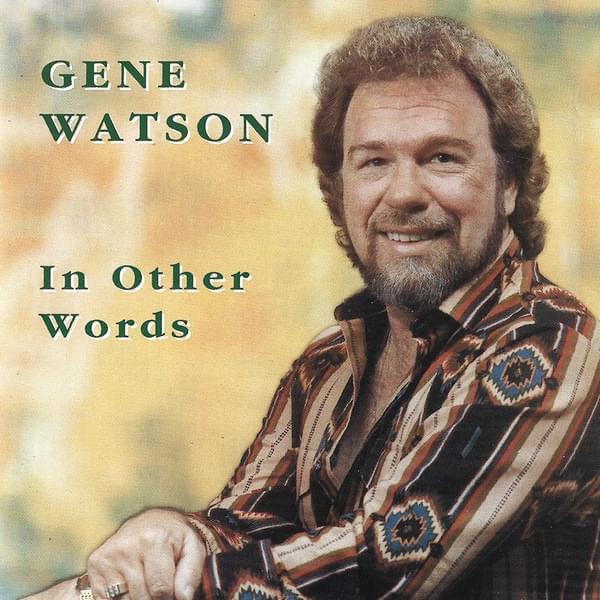
 View Artist